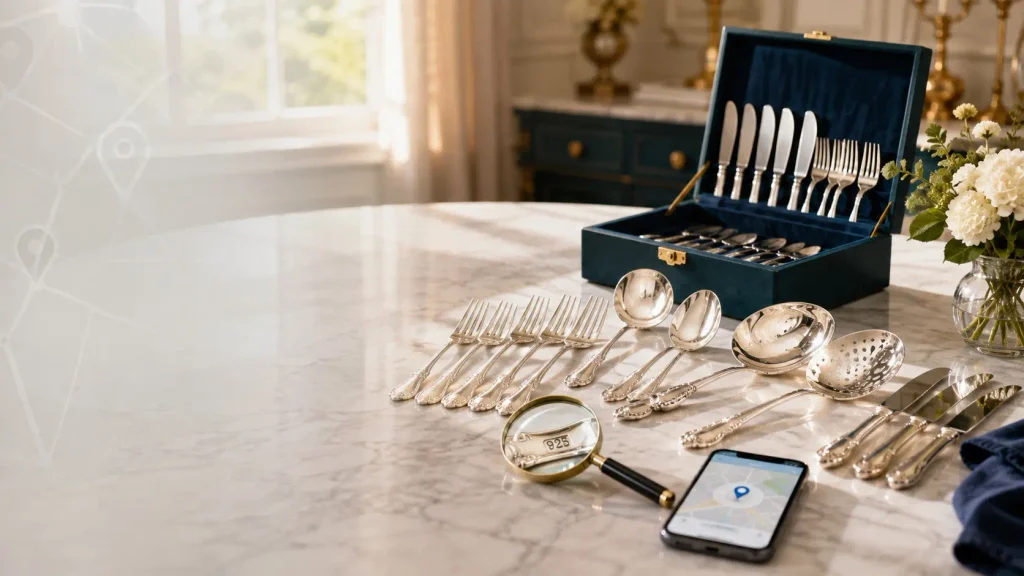
If you’ve received a silverware set as an heirloom, found an old flatware chest, or are just looking to replace silverware pieces you don’t use anymore, you might be wondering where to sell silver flatware near me and how to find a trustworthy buyer. The nearest shop isn’t necessarily the wisest choice, particularly if an antique or collectible set could be worth more than simply its silver content.
Some buyers only care about the weight, purity and the current price of silver. Dealers in precious metals and refiners, and some coin dealers, often buy ordinary sterling flatware for its recoverable metal content. However, antique-silver dealers, estate jewelry buyers, auction houses and collectors may also take into account the maker, pattern, age, condition and completeness of the set. Again, some buyers may be looking for sterling silver, silverplated flatware or incomplete services and rare matching sets. Therefore, the distinction in type of buyers can make a real difference in the offer you receive.
Keeping the above in mind, first step for you is to find silver flatware buyers in your area. Check out the different types of buyers available, call ahead and make sure they buy your type of flatware and shop around at least 2 or 3 offers before making a final decision. In this article of guidance, we’ll guide you through the entire process.
📍 Search for Silver Flatware Buyers by ZIP Code
In this guide on how to sell silver flatware, we’ll go over the following nine options for selling your silverware:
- Precious-metal dealers
- Silver refiners
- Coin dealers
- Estate jewelry buyers
- Antique silver dealers
- Auction houses
- Consignment shops
- Pawn shops
- Online marketplaces
Enter your five-digit US ZIP Code to search for local buyers and other selling options (we apologise that the following mechanism doe:
Find Silver Flatware Buyers Near You
Enter your five-digit US ZIP Code and choose the type of buyer you want to find.
Results open in Google Maps. Call before visiting to confirm that the business currently buys your type of silverware.
Important: A directory listing does not guarantee that a business currently purchases silver flatware. Call before visiting and ask whether the buyer accepts your particular type of silverware.
🔎 Finding Where To Sell Silver Flatware Near Me Is Only The First Step
The above ZIP Code locator can help draw a shortlist alright; but locating a nearby buyer does not end in itself. It does’nt give a definitive answer to the quest where can I sell sterling flatware. Finding the right business is the next important step. You must ascertain if the located shop currently purchases silver flatware at all, accepts silver-plated pieces or only sterling silver products, or appreciates the difference between melt value and collectible value.
Before you visit any of these businesses —or leave valuable pieces with them— you may want to call them and ask a few direct questions:
* Do you purchase sterling silver flatware at the moment?
* Do you primarily buy silver-plated or collectible sets or both?
* Will you weight and test the pieces in my presence?
* What’s the method you use in the calculation of your offer?
* Do you take out any fees for testing, refining, or others from your offered price?
* Can you assess the resale value of a complete set before treating it as scrap?
* Do you need an appointment, identification, or proof of ownership, if I want do business with you?
You should observe if the buyer answers the questions unambiguously. A dependable professional buyer should have no problem in explaining clearly the process, identify the purity used in the calculation, and give you time to consider the offer. If their response is vague or overly rushed, move on with your search.
🧭 Where To Sell Sterling Flatware?
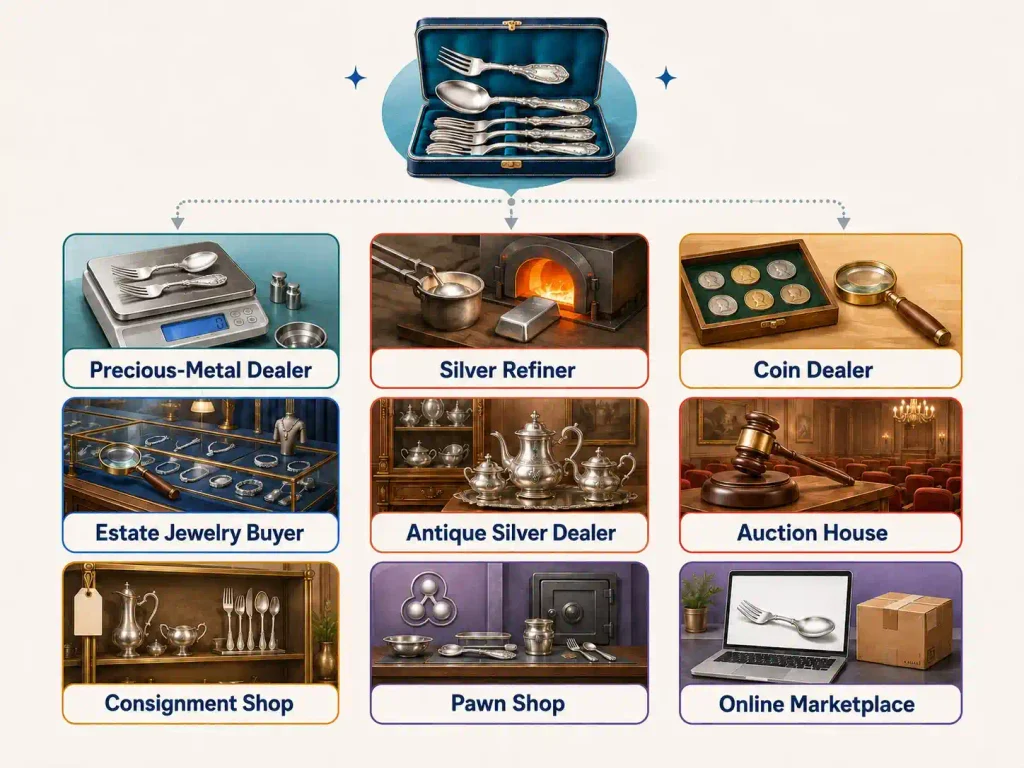
Now that you’ve identified potential buyers in general terms, the next question is which type is most appropriate for your flatware you actually own. A precious-metal dealer would be a good option for ordinary sterling poieces mainly for its silver content, while an antique-silver dealer or auction house would be more appropriate for selling you rare, complete, or collectible set.
If you’ve the questions like where can I sell silver flatware, where can I sell sterling silver flatware, or where do I sell silver flatware, use this simple rule: match the buyer to the source of value.
- Mostly metal value: Consider a reputed precious-metal dealer, silver refiner, or coin dealer.
- Antique or collectible value: Go for an antique-silver dealer, estate buyer, or auction house.
- Silver-plated or discontinued patterns: Look around for antique shops, consignment stores, replacement-piece dealers, collectors, or online marketplaces.
- Immediate local sale: A pawn shop may be useful in case of urgency, but its offer will usually be less than that from other buyers.
- Unsure what you own: Find a professional buyer who can identify and test the material and explain whether the pieces have resale value beyond their metal content.
Before accepting an offer, be sure the buyer is assessing your pieces as scrap, resale merchandise, or a collectible set. That evaluation can make a significant difference to the price you receive.
🧪 Is Your Flatware Sterling Silver or Silver Plated?
Before you decide which of these selling options to pursue, you’ll want to determine what your flatware is actually made of. The type of material, be it sterling silver, silver-plated flatware, stainless steel, or something else, can influence its worth and the right type of buyer to approach.
This difference can make a big difference to value.
“Sterling” is the name used in U.S. marking standards for silver that is at least 92.5% pure. A “925” piece is 925 parts silver per 1,000 parts metal. If you want to have a much detailed information of sterling silver, see the Wikipedia article.
🔖 Marks That May Indicate Sterling Silver
Check the backs of spoon and fork handles and the undersides of serving pieces for marks such as:
* Sterling
* 925
* 925/1000
* Ster
* 900 or 800 on some imported pieces
* A recognized silversmith’s hallmark
🏷️ Marks That May Indicate Silver Plate
Common silver-plate markings include:
* EPNS
* EP
* A1
* Silver Plate
* Triple Plate
* Quadruple Plate
* IS
* Silver on Copper
A magnet test can help eliminate some possibilities, but it cannot prove that an item is sterling. Sterling silver is not magnetic, but many non-silver metals are also non-magnetic.
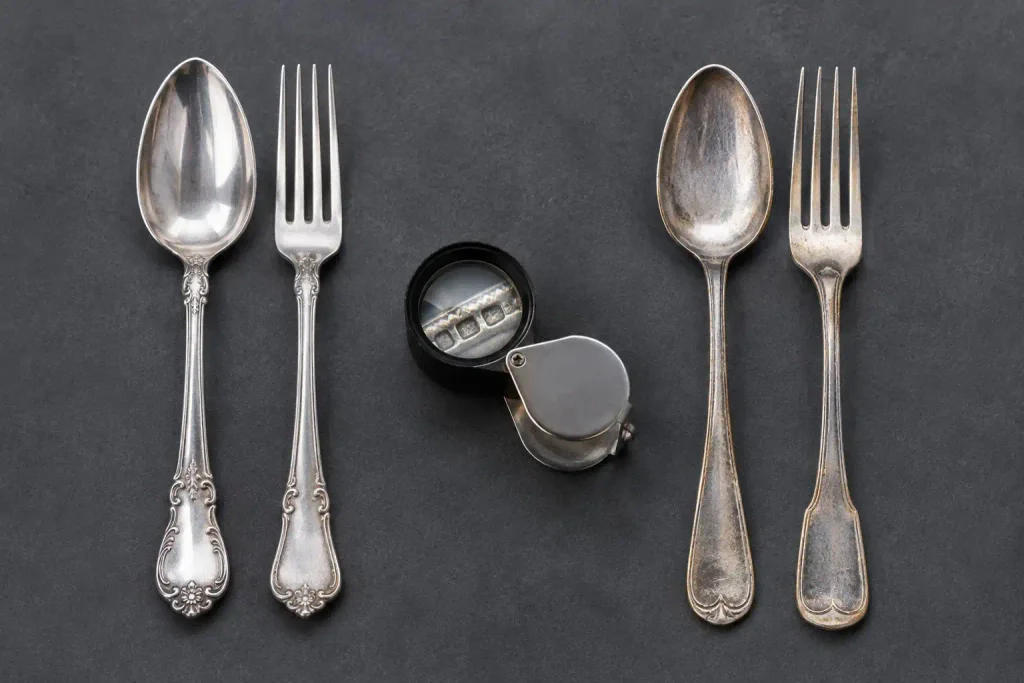
For a fuller identification process, go over out guide How to Tell If Flatware Is Real Silver. You can also compare the materials directly in the article Silver-Plated Silverware vs. Sterling Silver.
📊 Sterling Silver, Silver Plate, and Stainless Steel Compared
| Material | Common markings | Precious-metal value | Best selling route |
|---|---|---|---|
| Sterling silver | Sterling, 925, Ster | Significant | Silver buyer, coin dealer, refiner, estate buyer, or auction house |
| Coin silver | Coin, 900, maker’s mark | Significant | Specialist silver buyer or auction house |
| Continental silver | 800, 835, 900, or another fineness | Varies by purity | Specialist buyer or refiner |
| Silver plate | EPNS, EP, A1, Silver Plate | Usually minimal | Antique dealer, collector, replacement service, or online marketplace |
| Stainless steel | Stainless, 18/10, 18/8, 18/0 | No silver melt value | Resale, consignment, donation, or household use |
Do not assume that a famous-sounding name guarantees sterling silver. Many people research 1847 Rogers Bros silverware expecting solid silver, but numerous Rogers patterns were produced as silver plate.
💰 How Much Is Sterling Silver Flatware Worth?
The value of sterling silver flatware depends on much more than its appearance. The amount of silver it contains provides a starting point, but the maker, pattern, condition, completeness, and potential collector appeal can all influence what a buyer may actually pay.
If you’re wondering how much is a set of sterling silver flatware worth, the first step is to separate its intrinsic silver value from any additional resale or collectible value. Current silver prices and the buyer’s deductions will also affect the final offer.
Sterling flatware may have two different kinds of value:
1. Intrinsic silver value: the estimated value of the recoverable silver in the flatware set.
2. Resale or collectible value: the additional subjective value associated with a desirable pattern, recognized maker, unusual serving piece, complete set, or historical importance.
The basic melt-value formula is:
Value= eligible weight in grams × silver purity ÷ 31.1035 × current silver price per troy ounce
For sterling silver, the purity factor is usually 0.925.
It may be noted that one troy ounce contains approximately 31.1035 grams. Precious-metal valuation is normally quoted per troy ounce, not per ordinary household ounce. The APMEX melt-value explanation elaborates the same relationship among weight, purity, and spot price.
The result is, of course, an approximate gross melt value—not necessarily the amount a buyer will offer. A buyer may as well deduct refining costs, testing expenses, market risk, and a profit margin.
⚖️ Why Gross Flatware Weight Can Be Misleading
Do not place an entire flatware set on a kitchen scale and assume every gram is sterling silver.
Dinner knives of even silver sets often have stainless steel blades attached to hollow or weighted handles. Those handles may contain significant amount of non-silver elements like cement, resin, pitch, or another filling material. Even some serving pieces may also contain non-silver elements.
A professional buyer is able to identify which portions are sterling before calculating the recoverable silver weight. You may want to ask the buyer to explain what they have excluded and why.
🏺 When Collector Value May Be Higher Than Melt Value
If you arevselling a desirable set just as scrap, you destroy its value that might have been preserved through resale.
So, before accepting a melt-based offer, please investigate the set’s possible intangible values:
* Manufacturer
* Pattern name
* Approximate production date
* Number of pieces
* Place settings represented
* Matching serving pieces
* Monograms
* Repairs or damage
* Original storage chest
* Current demand for replacement pieces
If the flatware appears old or has decorative details, consult our Vintage Flatware Guide before selling it solely by weight.
🏪 Where To Sell Sterling Silver Flatware: Buyer Types Compared
Different buyers have different interests. A precious-metal dealer may put priority on the recoverable silver in your flatware, while an antique dealer or auction house may attache more importance to the maker, pattern, age, condition, and completeness of the set. The right selling approache, therefore, is largely the one that makes your flatware more valuable to any buyer.
Before selecting the route for the sale, consider if you’re selling ordinary sterling, an antique or collectible service, silver-plated pieces, or a mixed collection. The following table compares the main buyer types and explains what each one is generally best suited for.
| Buyer type | Best for | Advantages | Possible disadvantages |
|---|---|---|---|
| Precious-metal dealer | Ordinary sterling sold for melt | Fast testing and payment | May overlook pattern or collector value |
| Silver refiner | Large quantities of scrap sterling | Metal-focused pricing | Minimum quantities or mail-in requirements may apply |
| Coin dealer | Sterling and other precious-metal items | Familiarity with spot pricing and purity | Not every coin shop buys flatware |
| Estate jewelry buyer | Sterling, designer, or inherited collections | May evaluate workmanship and maker | Appointments may be required |
| Antique-silver dealer | Old patterns and quality serving pieces | Better chance of recognizing collectible value | Purchasing can be selective |
| Auction house | Rare, important, or high-value sets | Competitive bidding may increase the price | Seller fees and delayed payment |
| Consignment shop | Attractive complete sets | Exposure to retail buyers | Slow sale and commission charges |
| Pawn shop | Immediate local cash | Convenient and quick | Offers may be lower |
| Online marketplace | Silver plate or collectible patterns | Large audience and seller control | Photography, shipping, fees, and fraud risk |
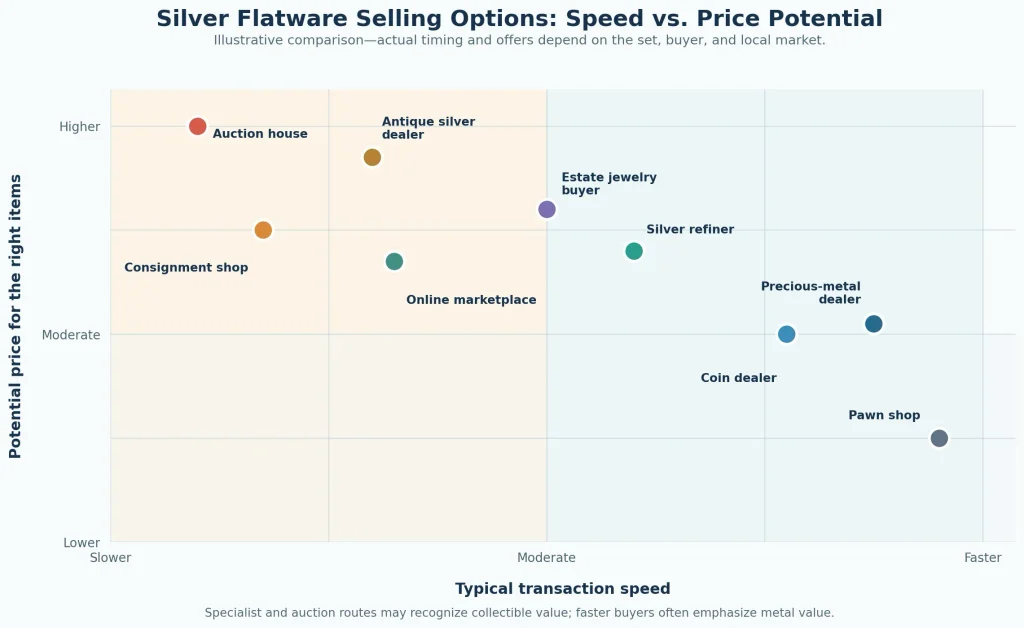
Speed is another factor to reckon with. A local precious-metal buyer or pawn shop should provide a quicker transaction. On the other hand, selling through an auction house, specialist dealer, or, online marketplace can take quite longer; but it may give your set exposure to buyers willing to pay for its collectible or resale value. The chart below illustrates typical transaction speed versus potential price for each buyer type.
🧭 Which Silver Flatware Buyer Is Best for You?
The best route depends on what you own and what matters most to you.
⏱️ If Speed Matters Most
Start with a reputable coin dealer, precious-metal buyer, refiner, or pawn shop. Ask for an itemized explanation of the weight, purity, spot price, deductions, and payout percentage before agreeing to sell.
💎 If the Highest Possible Price Matters Most
Consult a specialist antique-silver dealer or auction house before accepting a scrap offer. This is especially important for complete sets, unusual patterns, recognized makers, and decorative serving pieces.
🍴 If You Have Silver-Plated Flatware
Contact antique stores, consignment shops, collectors, and replacement-piece buyers. An online marketplace may be more practical than a metal dealer because plated pieces are generally valued for their appearance, pattern, usefulness, or collectibility rather than their silver content.
❔ If You Are Unsure What You Own
Choose a buyer who can test the pieces in front of you and explain the result. Do not authorize melting or destructive testing until you understand whether the set could have resale or collectible value.
🧾 How to Compare Silver Flatware Offers
Obtain at least two or three offers whenever practical. Don’t accept the first number you’re given—compare how each buyer measures weight and purity, what they exclude (for example, knife handles), and whether they deduct testing or refining fees. A careful comparison reveals whether an offer reflects metal melt value, collector interest, or resale potential, so you can choose the route that best fits your set.
Silver prices fluctuate, but two buyers contacted on the same day can still produce substantially different offers because of:
* Different scales
* Different purity assessments
* Treatment of knife handles
* Refining deductions
* Buyer margins
* Collector knowledge
* Demand for the pattern
* Whether the set is complete
Use this checklist when comparing offers:
| Question | Why it matters |
|---|---|
| What purity are you using? | Sterling is normally calculated at 92.5% silver. |
| What eligible silver weight did you record? | Filled handles and steel blades should not be counted as solid silver. |
| Are you quoting in troy ounces? | Precious metals are valued in troy ounces. |
| What spot price are you using? | It establishes the starting metal value. |
| What percentage of melt are you paying? | It reveals the buyer’s deduction. |
| Does the set have collectible value? | A desirable set may be worth more intact. |
| Are there testing or refining fees? | Fees reduce the final payment. |
| Is the offer final and in writing? | A written offer helps prevent misunderstandings. |
A reputable buyer should be able to explain the calculation without pressuring you. If two offers differ sharply, ask each buyer to walk through the figures rather than assuming the higher or lower number is automatically correct.
📸 How to Prepare Silverware for an Appraisal
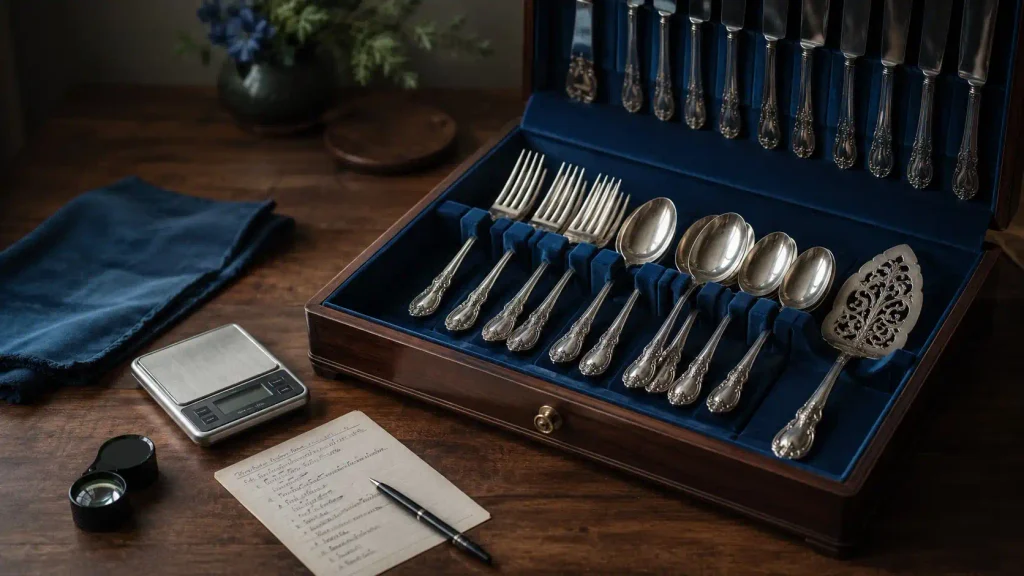
1️⃣ Photograph the Hallmarks
Take clear close-up photographs of every different stamp, logo, number, and symbol. Make sure the images are sharp enough to enlarge.
2️⃣ Separate the Patterns
Do not mix unrelated sets or patterns in one container. Keeping matching pieces together makes evaluation easier.
3️⃣ Count Every Piece
Record the number of dinner knives, dinner forks, salad forks, soup spoons, teaspoons, and serving utensils.
4️⃣ Note Damage Honestly
List bent tines, dents, deep scratches, loose knife blades, plating loss, repairs, and missing pieces.
5️⃣ Bring the Storage Chest
The original chest may help show that a set is complete, although the chest itself should not be included in the metal weight.
6️⃣ Research the Maker and Pattern
Even a few minutes of research can prevent a collectible set from being sold as anonymous scrap.
✨ Should You Polish Silver Before Selling It?
Usually, extensive polishing is unnecessary.
A light wipe with a soft cloth can make hallmarks easier to read, but a buyer can test tarnished sterling. Dark tarnish does not eliminate the underlying silver value.
Avoid abrasive powders, wire brushes, scouring pads, harsh dips, and repeated polishing. These methods can scratch sterling and permanently damage thin silver plating. For antique pieces, leave the existing finish alone until a specialist has examined them.
If you need appropriate cleaning, follow our gentle silverware cleaning guide.
🚩 Warning Signs When Choosing a Silver Buyer
Proceed cautiously if a buyer:
* Refuses to weigh the pieces where you can see the scale
* Will not explain how the offer was calculated
* Uses ordinary ounces without converting to troy ounces
* Claims the entire knife weight is solid sterling
* Wants to keep the items overnight without providing a written receipt
* Uses destructive testing without permission
* Pressures you to sell immediately
* Will not identify fees or deductions
* Makes an offer before checking marks, weight, or pattern
* Discourages you from obtaining another opinion
Also review the business’s reputation, complaints, physical address, and return or dispute policies before leaving valuable property. A polished website or prominent directory listing is not a substitute for careful verification.
🍽️ Does Anybody Buy Silver-Plated Flatware?
Yes, but silver plate usually sells for decorative, practical, or collectible value rather than for its silver content.
If you are researching where to sell silver plated flatware, focus on pattern-based and resale markets rather than refiners.
Potential buyers include:
* Antique shops
* Vintage dealers
* Consignment stores
* Replacement-piece dealers
* Prop and event-rental companies
* Craft and repurposing buyers
* Collectors completing discontinued patterns
* Private buyers through online marketplaces
Complete matching sets generally have a better chance of selling than mixed, heavily worn pieces. Pattern name, maker, condition, and completeness are especially important.
Some buyers may accept plated items only when they are ornate, made by a desirable manufacturer, or accompanied by unusual serving utensils.
🧩 Should You Sell a Complete Set or Individual Pieces?
Keep a complete set together until it has been evaluated.
Complete services can appeal to collectors, families, antique dealers, and auction bidders. Breaking the set apart too early may reduce its overall desirability.
Selling individual pieces may make sense when:
* The set is already incomplete
* The pattern is sought after for replacements
* Rare serving pieces command separate premiums
* No buyer wants the entire collection
* The pieces are silver plated and have little melt value
Search completed sales for the exact manufacturer, pattern, and utensil type—not merely for “vintage silverware.” Asking prices can be useful references, but completed sales provide better evidence of what buyers have actually paid.
📦 Local Sale or Mail-In Silver Buyer?
A local buyer allows you to observe testing and weighing, ask questions in real time, and leave with the items if you dislike the offer.
A mail-in buyer can be useful when no specialist operates nearby, but it requires additional precautions:
* Photograph and inventory every piece
* Record the package weight
* Use tracking and adequate insurance
* Read the rejection and return policy
* Understand who pays return shipping
* Confirm how long the offer remains valid
* Check whether payment is issued automatically
* Do not mail an unidentified antique set solely for scrap
For valuable collections, an in-person appraisal is generally preferable before using a mail-in service.
🍴 Selling Old Silverware and Choosing a New Set
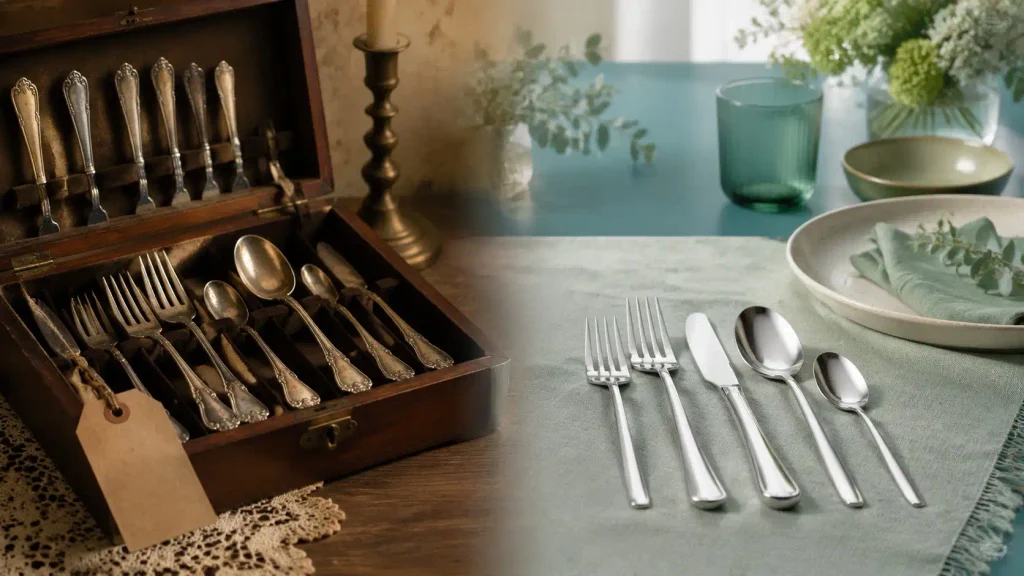
Selling inherited sterling or unused silver plate can also be an opportunity to choose flatware that better fits everyday life.
Modern stainless steel requires less maintenance, resists tarnish, and is generally dishwasher-friendly. Our guide to stainless steel vs. sterling silver flatware explains the practical differences.
For replacement ideas, browse:
* Best Flatware Made in the USA
* The True Cost of Premium Flatware
If you decide to keep part of the collection, a protective silverware storage box can help organize the pieces and reduce exposure to moisture and airborne contaminants.
❓ Frequently Asked Questions
📍 Where Is the Best Place to Sell Sterling Silver Flatware Near Me?
Start with reputable precious-metal dealers, coin shops, estate jewelry buyers, and antique-silver specialists. Compare at least two offers. Consult an auction house before scrapping a rare, designer, antique, or complete set.
🏦 Do Pawn Shops Buy Silverware?
Some pawn shops buy sterling silver flatware, but acceptance policies and payouts vary. Call first and ask whether the shop buys sterling utensils, how it handles weighted knives, and what percentage of melt value it typically pays.
🗺️ How Can I Find Who Buys Silver Flatware Near Me by ZIP Code?
Enter your five-digit ZIP Code in the locator on this page. It searches for relevant buyer categories near the ZIP Code. Check the distance and business details, then call to confirm that the business currently purchases your type of flatware before traveling.
💵 How Much Do Silver Buyers Pay for Sterling Flatware?
Offers depend on eligible silver weight, purity, current spot price, refining deductions, buyer margin, and possible collectible value. Ask the buyer to identify the weight, purity, spot-price reference, and percentage of melt used in the offer.
🔖 Is Sterling Silver Flatware Always Marked?
Most US sterling flatware is marked “Sterling,” “925,” or with a recognized maker’s hallmark, but older or imported pieces may use different marks. The absence of an obvious mark does not conclusively prove that an item is not silver.
🍽️ Is Silver-Plated Flatware Worth Selling?
It can be, particularly when the pattern is collectible, the set is complete, or the pieces are decorative and in excellent condition. However, the thin silver coating normally provides little scrap value.
♻️ Should I Sell Sterling Flatware for Scrap?
Scrap may be appropriate for damaged, mismatched, or ordinary sterling pieces. Before scrapping a complete or antique set, check its maker, pattern, age, condition, and resale demand.
⚖️ Can I Weigh My Flatware at Home?
Yes, but treat the result as a preliminary estimate. Kitchen scales may not be sufficiently accurate, and knife handles can contain non-silver filling. Precious metals are valued in troy ounces rather than ordinary ounces.
🔤 Do Monograms Reduce Silverware Value?
Monograms can reduce demand among some retail buyers, but they do not remove the underlying silver content. Historically interesting or especially well-executed monograms may still appeal to collectors.
🛠️ Do Buyers Purchase Broken Sterling Silverware?
Many precious-metal buyers and refiners accept broken, bent, engraved, or mismatched sterling because it retains recoverable silver value.
✅ How To Find Who Buys Sterling Silver Near Me?
Enter your ZIP Code in the above locator, review nearby options, and call at least two buyers before accepting an offer.
Know what you own, understand how the offer is calculated, and decide whether the pieces deserve to be sold intact rather than melted. A small amount of preparation—and the willingness to ask a few careful questions—can make a meaningful difference in the price you receive.
Discover more from Flatware Finesse
Subscribe to get the latest posts sent to your email.