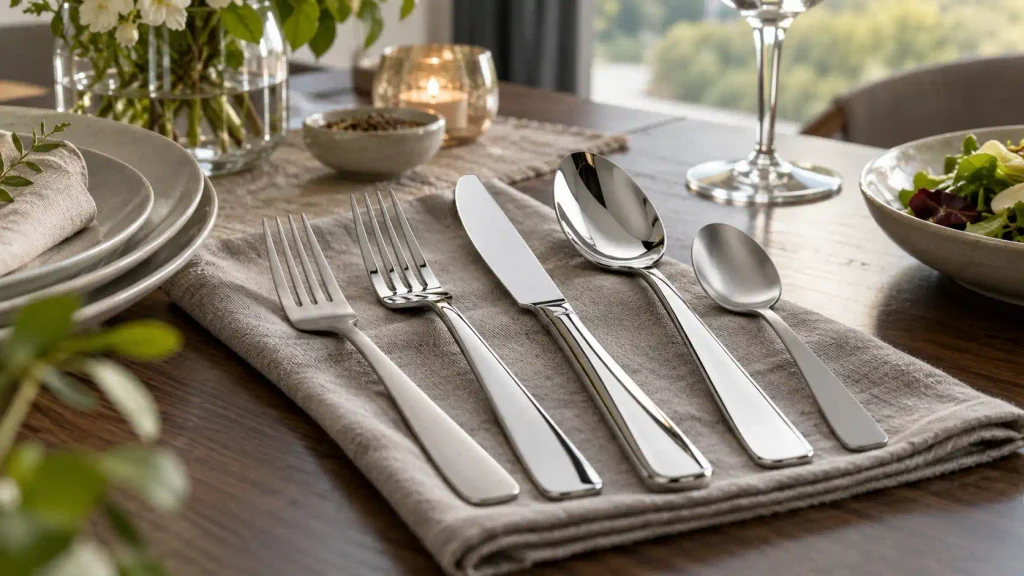
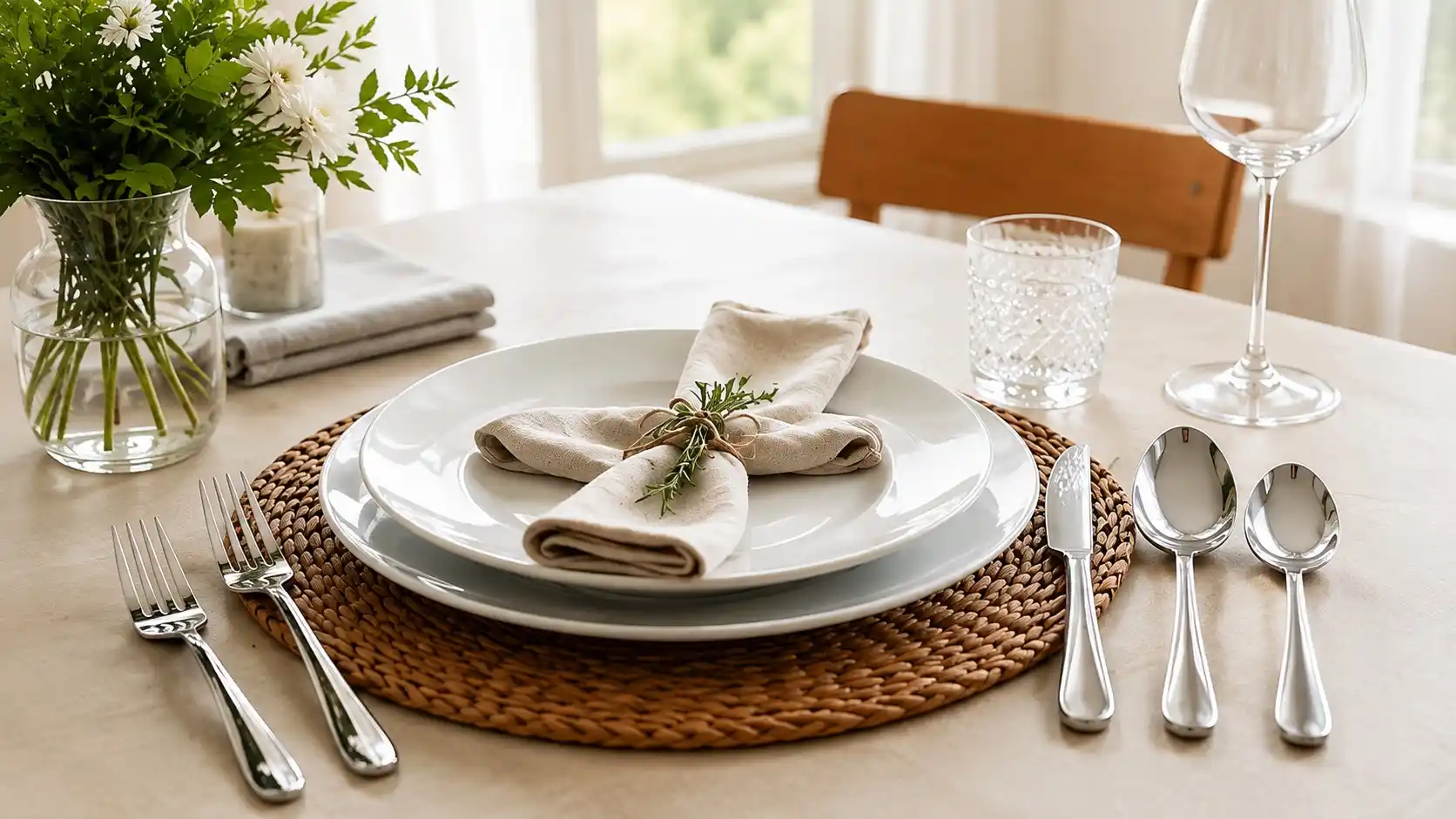
A fork, spoon, or knife may look like a basic kitchen item, but the material used to make it plays an important role in its durability, appearance, and everyday feel.
When choosing stainless steel flatware, you may have noticed a marking like 18/10 stainless steel on product descriptions or packaging. The numbers may seem technical, but they tell you something important about the metal composition and quality of the flatware.
Does 18/10 mean the flatware is better? Is it worth paying more for? How does it compare with other stainless steel grades? And why can two flatware sets made from similar materials feel different in actual use?
These questions matter because flatware is one of the most frequently used items in a home. A dinner plate may be used once or twice a day, but a fork or spoon is handled repeatedly throughout the year.
The right combination of material, weight, finish, and construction can make a noticeable difference in how flatware performs over time.
Understanding 18/10 stainless steel helps you look beyond appearance and make a more informed buying decision. It allows you to compare flatware sets based on durability, maintenance, and long-term value rather than just design.
This guide explains in simple terms what 18/10 stainless steel means, why it is commonly used in quality flatware, how it compares with other stainless steel grades, and what factors you should consider before making a purchase.
🔍 What Does 18/10 Stainless Steel Mean?
Before understanding 18/10 stainless steel, it helps to understand what stainless steel is. Iron is one of the oldest metals used by humans. Since the beginning of the Iron Age (around 1200 BCE in many regions), iron has been used to make tools, weapons, farming equipment, and everyday objects because it is strong and widely available. However, pure iron is relatively soft and can rust easily when exposed to air and moisture.
Steel was developed as an improved form of iron by adding carbon, which increases its strength and hardness. However, ordinary steel can still corrode over time. Stainless steel was created to improve steel further by adding chromium, which allows the surface to form a protective layer that helps resist rust and corrosion. Some stainless steel grades also contain elements such as nickel to improve durability, appearance, and performance.
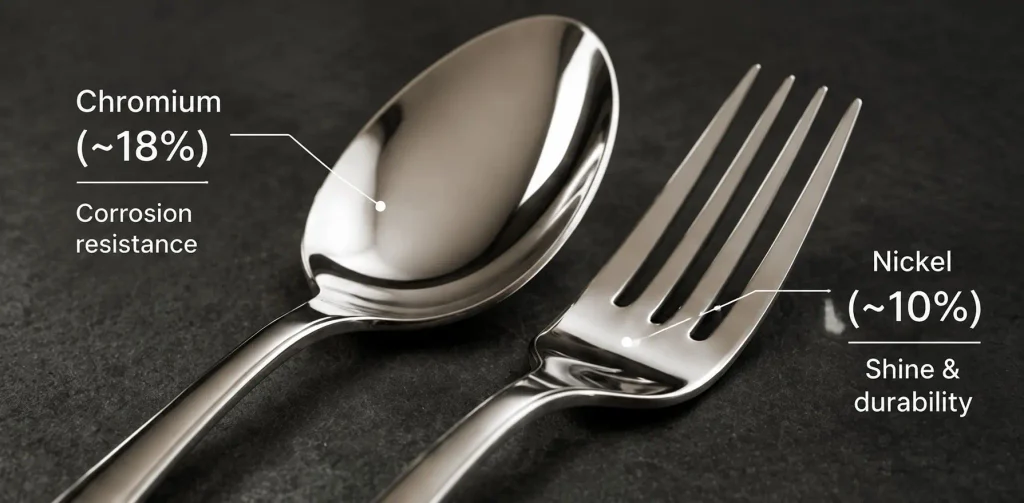
The term 18/10 stainless steel refers to the approximate percentage of chromium and nickel contained in the steel alloy.
The first number represents chromium.
The second number represents nickel.
In simple terms:
- 18 = approximately 18% chromium
- 10 = approximately 10% nickel
The remaining part is mostly iron along with small amounts of other elements.
The word “stainless” can sometimes create confusion. Stainless steel is not completely immune to every type of damage. It is called stainless because chromium allows the surface to form a thin protective layer that helps resist corrosion.
This protective layer is why a stainless steel fork can survive years of contact with food, water, and washing without behaving like ordinary steel.
The addition of nickel is what separates many premium flatware grades from cheaper alternatives.
🧪 Why Chromium and Nickel Matter in Flatware
A stainless steel fork does more than simply hold food.
It has to survive:
- acidic foods such as tomatoes and citrus
- repeated dishwasher cycles
- moisture exposure
- scratches from plates
- years of handling
Chromium plays the first major role.
When stainless steel contains enough chromium, it forms a passive oxide layer on the surface. This invisible layer protects the metal underneath.
Nickel adds another dimension.
It contributes to:
- smoother appearance
- brighter polish
- improved corrosion resistance
- a more premium feel
This is why many high-quality flatware collections use 18/10 stainless steel. People looking for higher-quality options can explore premium flatware collections to compare materials, craftsmanship, durability, and long-term value before choosing a set.
However, the alloy is only one part of the story.
A poorly designed flatware piece made from good steel may still feel uncomfortable. A well-designed piece with proper balance and finishing can feel much better.
Material creates the foundation.
Craftsmanship creates the experience.
🍴 Why Is 18/10 Stainless Steel Popular for Flatware?
The popularity of 18/10 stainless steel comes from a practical balance.
It provides durability without requiring the maintenance associated with traditional silver. Before deciding between modern stainless steel and traditional silver, compare stainless steel vs sterling silver flatware to understand the differences in maintenance, appearance, durability, and everyday practicality.
Sterling silver flatware has a special place in dining history, but it requires polishing and careful handling. Stainless steel became popular because families wanted something attractive that could handle everyday life.
18/10 stainless steel fits that role well.
Before deciding between modern stainless steel and traditional silver, compare stainless steel vs sterling silver flatware to understand the differences in maintenance, appearance, durability, and everyday practicality.
It offers a practical combination of durability, appearance, and easy maintenance.
Many people first notice the difference when holding two flatware sets side by side.
One feels thin and lightweight.
The other feels balanced, comfortable, and substantial.
That difference is not always caused by the steel grade alone. Weight, thickness, manufacturing method, and design also influence the experience.
🏠 Is 18/10 Stainless Steel Good for Everyday Flatware?
For most households, yes.
18/10 stainless steel is widely considered a premium choice for everyday flatware because it combines appearance and practicality.
But “good” depends on what you expect from your flatware.
Someone replacing inexpensive college apartment flatware may mainly want durability and affordability.
Someone choosing flatware for a wedding registry or long-term home use may care more about:
- comfortable weight
- elegant design
- consistent finish
- replacement availability
A good 18/10 flatware set should feel natural during meals.
The fork should not feel flimsy.
The spoon should sit comfortably in the hand.
The knife should have enough strength and balance for normal cutting tasks. Professional flatware evaluations often focus on these details rather than material alone. Weight, balance, size, and comfort strongly affect daily use.
⚖️ 18/10 vs 18/8 vs 18/0 Stainless Steel Flatware: Understanding the Differences
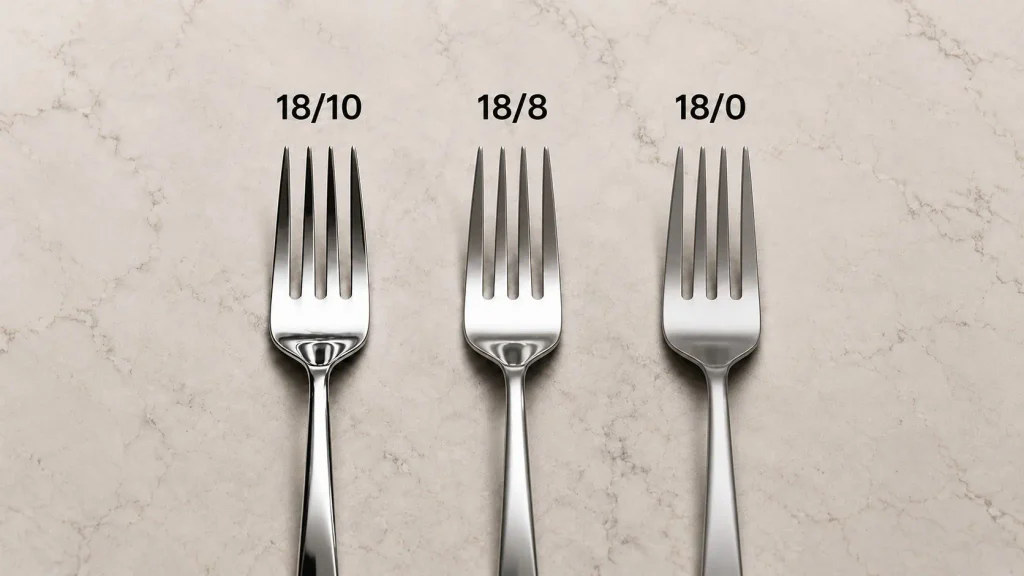
When people compare stainless steel flatware, three grades appear frequently:
- 18/10 stainless steel
- 18/8 stainless steel
- 18/0 stainless steel
At first glance, the difference looks small.
After all, the chromium percentage is almost identical. The main difference is nickel content.
But that small difference affects how the flatware looks, feels, and performs over time.
Understanding these grades helps explain why one stainless steel set may cost significantly more than another.
🥄 18/10 Stainless Steel vs 18/8 Stainless Steel
18/10 and 18/8 stainless steel are closely related.
Both contain approximately:
- 18% chromium
- a percentage of nickel
The main difference is the nickel content.
The difference is not dramatic.
A well-made 18/8 flatware set can perform very well. Many people would never notice a difference during normal daily use.
However, 18/10 has become associated with premium flatware because manufacturers use the additional nickel to achieve a refined finish and a more luxurious appearance.
For someone buying a flatware set that will remain on the table for decades, 18/10 is often the preferred choice.
🔄 18/10 Stainless Steel vs 18/0 Stainless Steel
The difference between 18/10 and 18/0 is more noticeable.
The reason is simple:
18/0 contains no nickel.
Nickel-free stainless steel is often used for more affordable flatware because it reduces manufacturing cost.
This does not mean 18/0 flatware is unusable.
A well-designed 18/0 set can serve a household for years.
The difference is that 18/10 is usually chosen when buyers want a more polished appearance and a more premium feel.
💡 A Common Misunderstanding: Is Higher Nickel Always Better?
This is where flatware discussions often become too simplistic.
More nickel does not automatically mean every piece of flatware will feel better.
A poorly designed 18/10 fork may still feel awkward.
A carefully designed 18/8 fork may feel excellent.
The stainless steel grade is one factor among several.
A quality flatware set depends on:
- alloy composition
- manufacturing process
- thickness
- weight
- balance
- handle design
- finishing quality
Think of it like a car.
The engine matters, but the driving experience also depends on the suspension, design, and construction.
🧐 How to Identify Genuine 18/10 Stainless Steel Flatware
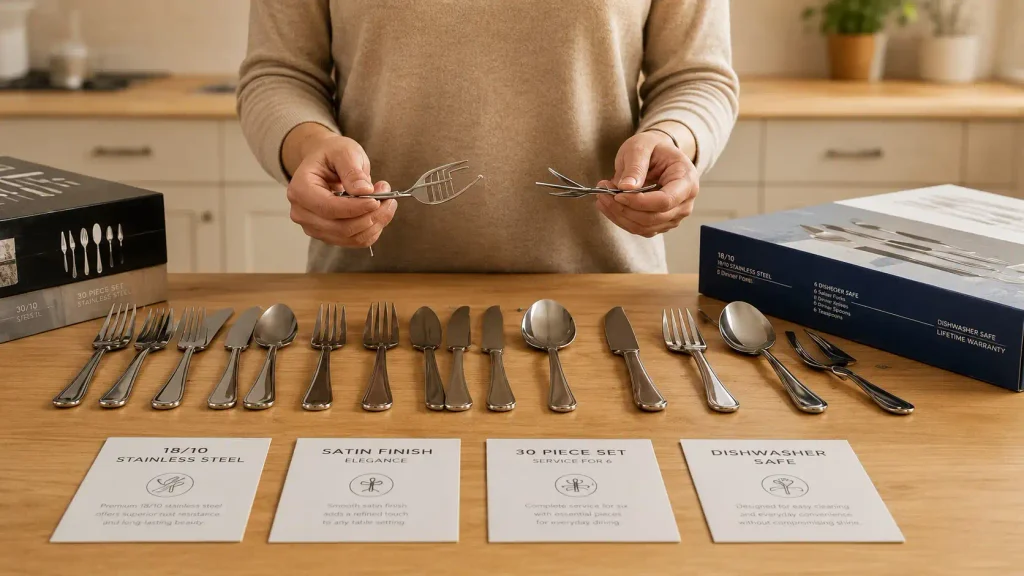
The term “stainless steel” appears on thousands of flatware listings.
But not every listing clearly explains the grade.
If you want genuine 18/10 stainless steel flatware, check the following:
1. Look for clear material specifications
Reliable manufacturers usually mention:
- 18/10 stainless steel
- stainless steel grade
- alloy composition
Be careful with descriptions like:
- “premium stainless steel”
- “high-quality stainless”
- “luxury stainless”
These phrases sound impressive but do not identify the actual composition.
2. Check the manufacturer details
Established flatware brands usually provide material information.
Brands known for 18/10 collections often publish specifications rather than relying only on marketing language.
This is especially important when shopping online because product photos can make inexpensive flatware look similar to premium sets.
3. Consider the weight and construction
Pick up a piece if possible.
A quality flatware piece often has:
- comfortable weight
- smooth edges
- balanced handle
- clean finishing
Very thin pieces may indicate lower-cost construction, regardless of the material claim.
🏗️ What Makes Premium 18/10 Flatware Different?
Two flatware sets can both say “18/10 stainless steel” and still feel completely different.
Why?
Because the manufacturing process matters.
Weight
Weight is one of the first things people notice.
A heavier fork often feels more comfortable because it provides better balance.
However, extremely heavy flatware is not always better. The goal is comfort.
A dinner fork should feel natural, not like a tool.
Balance
Good flatware should feel evenly distributed.
A knife with a heavy handle and light blade can feel awkward.
A spoon with poor balance may feel uncomfortable after repeated use.
Premium manufacturers spend time refining these details.
Edge finishing
Cheap flatware often has:
- rough edges
- uneven polishing
- uncomfortable handles
Higher-quality pieces usually have smoother finishing.
This becomes especially noticeable around:
- spoon edges
- fork tines
- knife handles
Thickness
Thickness affects durability and comfort.
Very thin flatware may bend more easily and often feels less substantial.
Thicker construction usually creates a more premium dining experience.
🍽️ Does 18/10 Stainless Steel Flatware Feel Different During Meals?
Yes, but the difference is subtle.
The biggest changes are not usually visible from a photograph.
They are felt.
A quality set often feels:
- more balanced in the hand
- smoother against the mouth
- stronger during use
- more comfortable during long meals
This is why many people who upgrade from inexpensive flatware notice the difference immediately.
The improvement is not only about appearance. It is about everyday interaction
🧾 Where 18/10 Stainless Steel Fits in the Flatware Market
The flatware market generally falls into several groups:
For most households, 18/10 stainless steel occupies the sweet spot between luxury and practicality.
🛒 How to Choose the Right 18/10
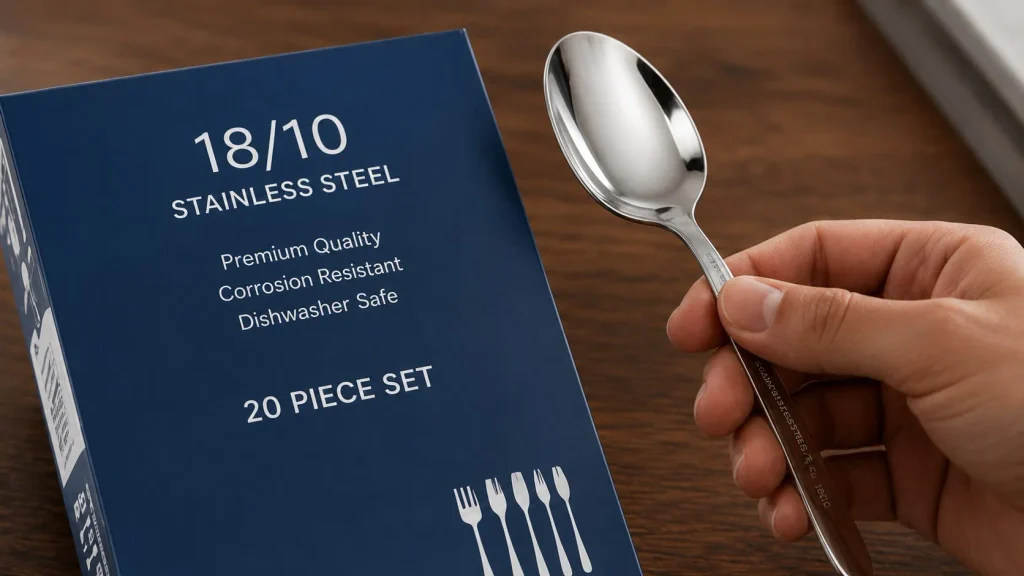
Choosing 18/10 stainless steel flatware may seem simple.
The label looks reassuring. The material sounds premium.
But a good buying decision requires looking beyond the words “18/10.”
A flatware set is something you will touch every day. Small details that seem unimportant in a store can become noticeable after months of use.
Before buying, consider these factors.
⚖️ 1. Weight: Does the Flatware Feel Comfortable?
Weight is one of the easiest differences to notice.
A very lightweight fork may feel inexpensive. A very heavy fork may feel tiring during longer meals.
The ideal weight depends on personal preference.
Some people prefer:
- lightweight pieces for casual dining
- heavier pieces for a restaurant-style feel
Many premium 18/10 stainless steel flatware sets are designed with balanced weight rather than simply adding more metal.
A well-balanced fork feels natural when you pick it up. It should not feel like the handle is pulling your hand downward.
✋ 2. Balance: How Does It Sit in Your Hand?
Balance is often overlooked.
Two forks can have the same material and similar appearance but feel completely different.
A balanced piece should:
- rest comfortably between your fingers
- feel stable while eating
- have a natural connection between handle and eating end
This is one reason product photos are not enough when choosing flatware online.
A shiny finish can attract attention, but comfort comes from design.
✨ 3. Finish: Mirror, Satin, or Brushed?
The surface finish affects both appearance and maintenance.
Mirror finish
Mirror-polished flatware has a bright, reflective surface.
Advantages:
- elegant appearance
- formal dining look
- catches light beautifully
Possible downside:
- fingerprints and water spots may be easier to notice
Satin finish
Satin flatware has a softer, less reflective appearance.
Advantages:
- hides fingerprints better
- creates a modern look
- works well for everyday dining
Brushed finish
Brushed finishes have a textured appearance created through surface treatment.
They often suit:
- contemporary kitchens
- minimalist table settings
There is no universally “best” finish.
The right choice depends on your dining style.
For those who prefer textured and decorative designs, hammered flatware styles offer a distinctive alternative to traditional smooth finishes.
🍴 4. Place Setting Size
Most 18/10 stainless steel flatware sets come in different piece counts.
Common options include:
- 20-piece sets
- 40-piece sets
- 45-piece sets
- 65-piece sets
A 20-piece set usually serves four people.
A larger set may include:
- dinner forks
- salad forks
- dinner knives
- soup spoons
- teaspoons
- serving pieces
For a small household, a basic set may be enough.
For families or frequent entertainers, larger sets are usually more practical.
🔪 5. Knife Design Matters More Than Many Buyers Expect
People often focus on forks and spoons.
But the knife is usually the piece that reveals construction quality.
A good flatware knife should:
- feel balanced
- have a comfortable handle
- cut everyday foods easily
- match the weight of the other pieces
Some premium sets use forged knives, while others use stamped construction.
Forged knives are generally heavier and more substantial, although a well-designed stamped knife can still perform well.
🏷️ Popular 18/10 Stainless Steel Flatware Brands Worth Exploring
The goal of this guide is not to repeat complete product reviews.
Instead, this section should act as a bridge to your existing Flatware Finesse content.
Readers who understand the importance of 18/10 stainless steel are often ready to explore specific brands.
Consider linking this section to your existing articles about:
- premium flatware collections
- brand comparisons
- specific flatware reviews
Examples of brands frequently associated with 18/10 stainless steel include:
Zwilling
Known for German-inspired design and premium kitchen products, Zwilling offers several stainless steel flatware collections with a focus on durability and refined design.
You may also check out the following directly at Amazon:

- Manufactured from high quality 18/10 Stainless Steel
- Optimal combination of 18% Chromium and 10% Nickel offers the best corrosion resistance
- Maintains a long lasting silver-like luster
Oneida
Oneida has a long history in American flatware and offers many 18/10 stainless steel patterns ranging from traditional to contemporary.
For shoppers interested in classic American flatware patterns, exploring Oneida flatware collections provides a closer look at available styles and quality differences.
You may also check out the following directly at Amazon:

- WHY IT’S SPECIAL: Oneida’s Juilliard flatware is designed to seamlessly adapt to any occasion, whether formal or casual,…
- WHO IT’S PERFECT FOR: Those seeking stainless steel silverware that combines timeless style with adaptability, making it…
- WHAT’S IN THE BOX: Includes a 45-piece flatware set for 8 people, plus a 5-piece serving set. Each of the 8 flatware pla…
Lenox
Lenox flatware collections often appeal to buyers looking for elegant designs suitable for both daily use and formal dining.
If you are considering Lenox for your dining table, these Lenox stainless steel flatware reviews can help you compare designs, finishes, and everyday performance.
You may also check out the following directly at Amazon:

- WHY IT’S SPECIAL: Lenox’s French Perle flatware is crafted of 18/10 stainless steel, ensuring a radiant, lasting shine. …
- WHO IT’S FOR: Those seeking stainless steel silverware that combines sophistication and practicality, making it a stando…
- WHAT’S IN THE BOX: Includes a 65-piece flatware set for 12 people, plus a 5-piece serving set. Each of the 12 flatware p…
Liberty Tabletop
Liberty Tabletop is notable among buyers looking for American-made stainless steel flatware.
You may also check out the following directly at Amazon:
:

- Premium Material Construction: Finest Quality 18/10 Stainless Steel ensures durability and long-lasting performance for …
- American Craftsmanship: 100% Made in USA with superior manufacturing standards and quality control
- Professional Grade Knife: Forged Knife with Serrated Blade designed for efficient cutting performance
Mikasa
Mikasa offers a wide range of stainless steel flatware styles, including modern and classic designs.
You may also check out the following directly at Amazon:
:

- TIMELESS STYLE WITH A MODERN TWIST: Classic teardrop handles are elevated with a refined double dip design and a lustrou…
- COMPLETE TABLE SETTING FOR FOUR: This 20-piece flatware set includes service for 4 with 4 each of dinner fork, salad for…
- SUPERIOR 18/10 STAINLESS STEEL CONSTRUCTION: Crafted from high-grade 18/10 stainless steel, this silverware set offers e…
As an Amazon Associate, we may earn from qualifying purchases at no extra cost to you.
🧼 How to Care for 18/10 Stainless Steel Flatware
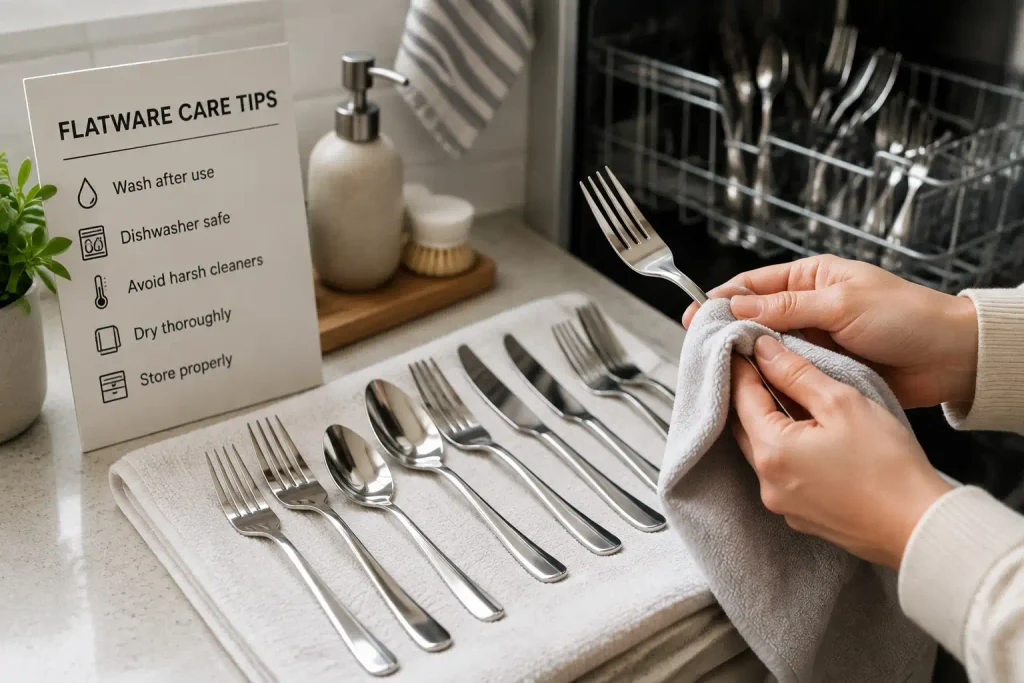
One reason people choose stainless steel flatware is simple:
It is easy to maintain.
Unlike silver, it does not require regular polishing to maintain its appearance.
However, good care helps preserve the finish.
Wash Promptly After Use
Food residue left for long periods can affect any metal surface.
Foods containing:
- salt
- vinegar
- tomato sauce
- citrus
can be harder on stainless steel if left for extended periods.
Dishwasher Tips
Most 18/10 stainless steel flatware is dishwasher safe.
However:
- avoid harsh detergents
- remove flatware soon after washing
- dry pieces if water spots appear
A dishwasher is convenient, but proper loading matters.
Avoid overcrowding pieces tightly together because trapped moisture can encourage spotting.
Avoid Abrasive Cleaners
Do not use:
- steel wool
- harsh scouring powders
- aggressive chemicals
These can scratch the surface.
A soft cloth is usually enough for maintaining shine.
Store Flatware Properly
Storage affects appearance.
Good practices include:
- keeping pieces separated
- avoiding contact with rough surfaces
- using drawer organizers
Small scratches naturally develop over time, but careful storage slows visible wear.
Final Thoughts: Is 18/10 Stainless Steel Flatware Worth Considering?

18/10 stainless steel has become a popular choice because it offers a practical balance.
It provides:
- durability for daily use
- resistance to corrosion
- attractive appearance
- easy maintenance
But the number alone does not tell the entire story.
A truly satisfying flatware set combines good material with thoughtful design.
The best choice is not always the heaviest or most expensive set. It is the one that feels comfortable in your hand, matches your table style, and continues looking good after years of meals.
Understanding 18/10 stainless steel gives you the knowledge to make that choice with confidence.
❓ Frequently Asked Questions About 18/10 Stainless Steel
What does 18/10 stainless steel mean?
18/10 stainless steel means the alloy contains approximately 18% chromium and 10% nickel. Chromium helps corrosion resistance, while nickel improves polish and durability.
Is 18/10 stainless steel better than 18/0?
For premium flatware, many buyers prefer 18/10 because it contains nickel and generally offers a brighter finish and greater corrosion resistance.
However, 18/0 can still be a practical choice for budget-conscious buyers.
Does 18/10 stainless steel rust?
High-quality 18/10 stainless steel is highly resistant to rust.
However, no stainless steel is completely impossible to stain or damage. Poor care, harsh chemicals, or prolonged exposure to salty substances can affect the surface.
Can 18/10 stainless steel go in the dishwasher?
Most 18/10 stainless steel flatware can be washed in a dishwasher.
Always follow the manufacturer’s care instructions.
Is 18/10 stainless steel safe?
Yes.
18/10 stainless steel is widely used for food-contact products, including flatware and kitchen equipment.
Why is 18/10 stainless steel more expensive?
The additional nickel content and the higher-quality positioning of many 18/10 products contribute to higher prices.
However, price also depends on:
- brand
- design
- manufacturing process
- weight
- finish
Discover more from Flatware Finesse
Subscribe to get the latest posts sent to your email.