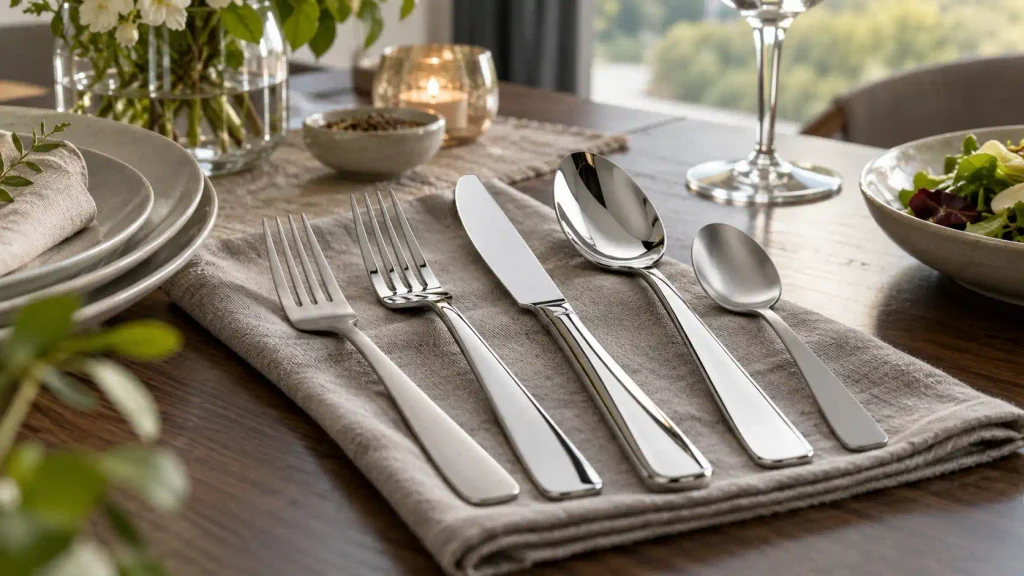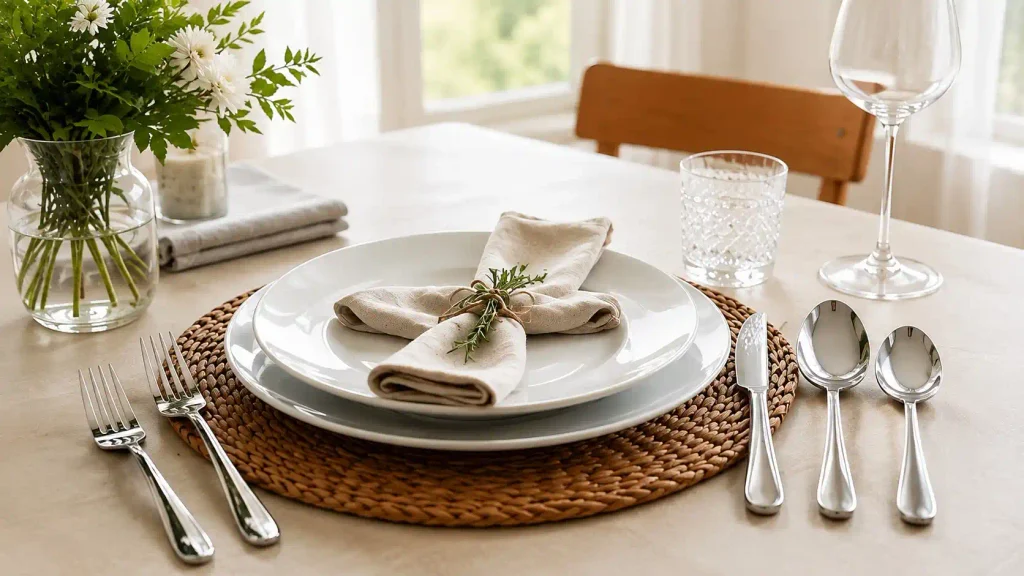

Imagine you’re sitting down at a beautifully set dinner table. On the left there are three forks. To the right 2 knives and a couple of spoons. There are some more utensils on top of the plate. The first course comes and suddenly you’re asking yourself: Which fork should I use first?
If that sounds familiar, you’re not the only one.
Most of us know how to use silverware at home without even thinking about it. A formal dinner is another matter. While correctness is a relative term, the question how to use flatware correctly becomes essential in such situations. Seasoned diners themselves may pause for a second when a collection of utensils are laid out together. The concern usually is not to make a big mistake. It’s just not knowing what each piece does.
The fact is that using silverware is not quite as complicated as it looks. Once you know a few basic rules, the whole place setting starts to make sense. You will know which utensil to grab, when to use it and where to place it when you are done.
If you’re heading to a wedding, business dinner, fine dining restaurant or just want to work on your table manners, these simple habits will help you feel more comfortable.
Here’s what you’ll learn in this guide:
- when to use each fork, knife and spoon;
- difference between American and Continental dining styles;
- how to hold your fork, knife and spoon naturally;
- where to place your utensils while taking a break;
- how to position your silverware when finished eating;
- proper way to eat bread and use dessert utensils;
- common silverware mistakes and how to avoid them
By the time you’ve finished reading, you’ll understand a formal place setting. You will also know exactly what each fork, knife and spoon is for, and how to use them with confidence.
🥄 Why Learning How to Use Silverware Properly Matters
Good table manners aren’t about showing off.
They’re about making everyone at the table feel comfortable.
When everyone follows similar dining customs, meals become smoother. Servers know when to clear your plate. Hosts don’t have to explain which utensil to use. Conversations flow naturally because nobody is distracted by uncertainty.
Knowing how to use utensils correctly can also help in many real-life situations:
- 💼 Business dinners
- 💍 Weddings
- 🎓 Graduation banquets
- 🎄 Holiday meals
- 🍽️ Fine dining restaurants
- ✈️ Cruise ships
- 🏨 Hotel dining rooms
Even if you rarely attend formal dinners, these habits often make everyday meals neater and more enjoyable.
🍴 What Is the Difference Between Silverware, Flatware and Cutlery?
Many people use these words as if they mean exactly the same thing. In everyday conversation, that’s perfectly acceptable. However, there are slight differences.
| Term | Meaning |
|---|---|
| Silverware | Originally utensils made of silver. Today it usually means all dining utensils. |
| Flatware | Modern stainless steel forks, knives and spoons. |
| Cutlery | A broad term covering eating utensils, especially knives, forks and spoons. |
Throughout this guide, we’ll use these terms naturally because many people search for how to use cutlery correctly while others search for how to use flatware correctly or how to use silverware properly. In most situations, they refer to the same dining utensils.
🍽️ Meet the Most Common Fine Dining Utensils
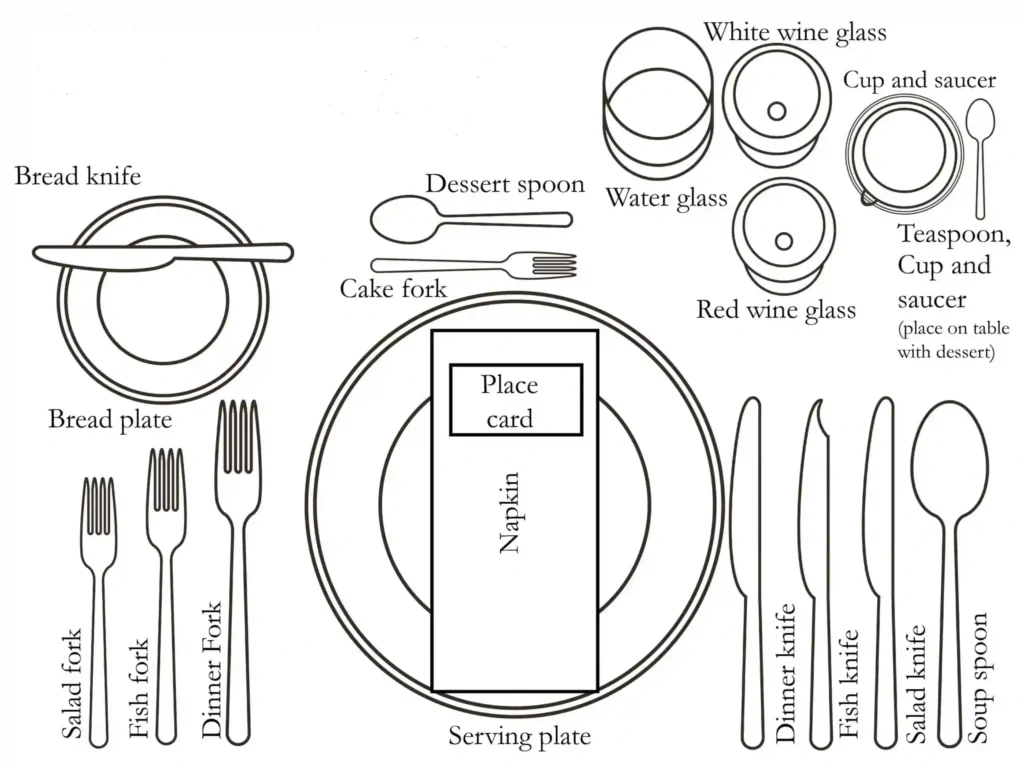
Before learning how to use cutlery at fine dining, it’s helpful to recognize the utensils you’ll most often see.
| Utensil | Main Purpose | Typical Position |
|---|---|---|
| Salad Fork | Salad or appetizer | Outermost fork on the left |
| Fish Fork | Fish course | Between the salad fork and dinner fork |
| Dinner Fork | Main course | Closest fork to the plate |
| Bread Knife (Butter Knife) | Spreading butter or soft spreads | Across the bread plate at the upper left |
| Dinner Knife | Cutting the main course | Closest knife on the right |
| Fish Knife | Separating and eating fish | Between the dinner knife and salad knife |
| Salad Knife | Salad or appetizer course | Outside the fish knife (if provided) |
| Soup Spoon | Soup | Outermost utensil on the right |
| Dessert Spoon | Soft desserts such as pudding or ice cream | Above the dinner plate |
| Cake Fork (Dessert Fork) | Cake, pie, or pastries | Above the dinner plate, below the dessert spoon |
| Teaspoon | Tea, coffee, or stirring beverages | Served with the cup and saucer or placed on the right |
Don’t worry if this seems like a lot. You rarely need every utensil at the same meal. If you’re thinking about replacing your old utensils with any cutlery set of a size of your choosing, you may also like our archive of articles of the best flatware sets.
🍰 What Does Each Utensil Do?
🥗 Salad Fork
Usually the outermost fork.
Smaller than the dinner fork.
Used for:
- Salads
- Some appetizers
🍖 Dinner Fork
The largest fork.
Used for:
- Steak
- Chicken
- Pasta
- Rice dishes
- Main course
🐟 Fish Fork
Sometimes has a wider shape.
Designed for separating delicate fish without breaking it apart.
🔪 Dinner Knife
Used to cut:
- Meat
- Chicken
- Large vegetables
Never wave it while talking.
🥣 Soup Spoon
A rounded spoon designed for soup.
Instead of scooping toward yourself, gently scoop away from your body.
Sip quietly from the side.
🍮 Dessert Spoon and Dessert Fork
These usually appear:
- Above the plate, or
- They are brought out with dessert.
Use whichever matches the dessert.
For example:
- Cake → Dessert fork
- Ice cream → Dessert spoon
- Pie → Fork first, spoon if needed
📋 Silverware Cheat Sheet
| Situation | Remember This |
|---|---|
| Choosing Utensils | Start with the outermost utensil and work inward. |
| Cutting Food | Hold the knife in your dominant hand and the fork in the other. |
| American Style | Cut the food, then switch the fork to your dominant hand before eating. |
| Continental Style | Keep the fork in your left hand throughout the meal. |
| Taking a Break | Rest the fork and knife on the plate without placing them on the table. |
| Finished Eating | Place the fork and knife together, parallel, near the 4 o’clock position on the plate. |
| Bread | Butter one bite-sized piece at a time instead of the whole slice. |
| Dessert | Use the dessert spoon or fork placed above the dinner plate, if provided. |
🍞 How Do You Eat Bread and Butter Properly?
Before knowing how to use silverware correctly, it’s important to haven idea of when or how to eat bread and butter. Bread is usually served before the first course and stays on the table throughout the meal. You don’t need to finish it first—it is perfectly acceptable to enjoy bread with soup or between courses.
If butter is provided, use the butter knife to place a small amount of butter on your bread plate. Then tear off one bite-sized piece of bread, butter only that piece, and eat it. Avoid buttering the entire roll or slice at once or biting directly into it.
📐 Which Fork, Knife and Spoon Do You Use First?
This is where many people become nervous, but the answer is surprisingly simple.
If you remember only one rule from this guide, make it this one:
Always use the utensil farthest from your plate first.
Each new course brings you one utensil closer to the dinner plate. The same rule applies to forks, knives, and spoons.
For example:
- Salad fork
- Dinner fork
- Dessert spoon or dessert fork
Even a formal dinner usually uses fewer utensils than many people expect. If the host serves only three courses, you won’t see every possible fork, knife, or spoon on the table.
Once you remember the outside-in rule, you’ll be able to handle almost any formal place setting with confidence.
🇺🇸 American vs 🇪🇺 Continental Style: Which One Should You Use?
One of the biggest questions people ask is whether they should switch the fork between hands while eating.
The answer lies in the difference on the dining style – American or Continental.
Both methods are correct. The important thing is to use one style consistently throughout the meal.
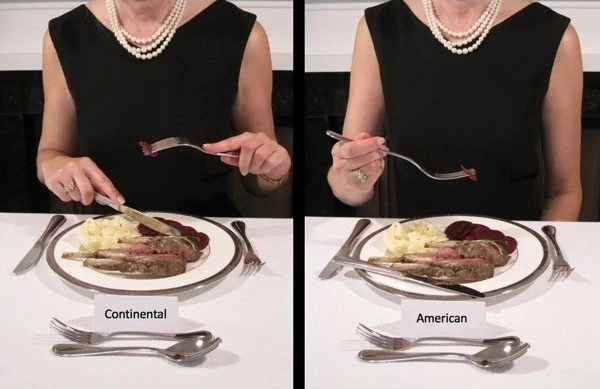
🇺🇸 American Style (Zigzag Style)
The American style is common in the United States and Canada.
Here’s how it works:
- Hold the fork in your left hand and the knife in your right hand while cutting food.
- Cut only one or two bites at a time.
- Put the knife down on the edge of your plate.
- Transfer the fork to your right hand.
- Eat with the fork, tines facing upward.
Basically, how to use forks at dinner distinguishes American style from the Eurpean one. Many people grow up eating this way, so it feels natural.
Best for:
- Casual dining
- Family dinners
- Most American restaurants
🇪🇺 Continental Style (European Style)
The Continental style is used throughout much of Europe and is becoming more common worldwide. How to use utensils continental style?
In this fashion, instead of switching hands, you keep each utensil where it started.
- Hold the fork in your left hand.
- Hold the knife in your right hand.
- Cut a bite.
- Lift the food with the fork without changing hands.
- Continue eating the entire meal this way.
Although, at a formal dinner, both styles are acceptable, many etiquette experts consider the Continental method smoother because there is less movement.
✋ How to Hold Forks, Knives and Spoons Correctly
Many people think there is a complicated technique. There isn’t. The goal is simply to look relaxed and stay comfortable. Learning how to use knives and forks lies at the core of dining room etiquette.
🍴 Holding the Fork
- Hold the handle gently.
- Keep your index finger near the top of the handle for control.
- Avoid gripping the fork like a shovel or squeezing it tightly.
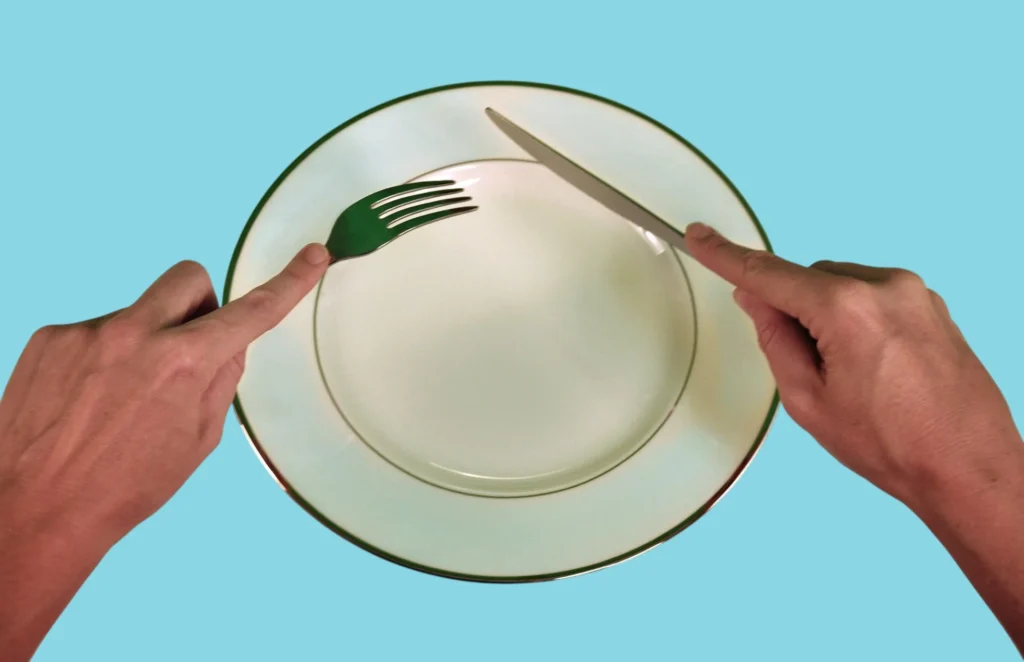
🔪 Holding the Knife
- Rest your index finger lightly along the top of the handle.
- Let the knife do the work.
- Saw gently instead of forcing the blade through food.
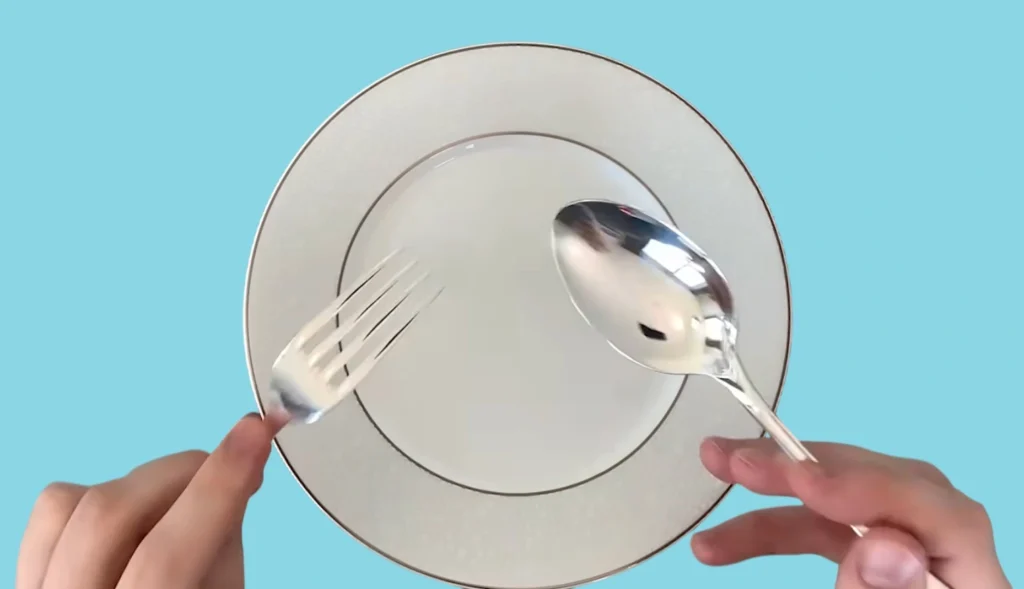
🥄 Holding the Spoon
- Hold it like a pencil.
- Lift soup quietly.
- Sip from the side of the spoon rather than placing the whole spoon into your mouth.
⏸️ How to Put Silverware on Table During the Meal
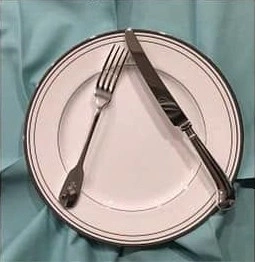
If you’re taking a short break but haven’t finished eating, don’t place your utensils on the table. Instead, rest them on your plate.
The most common resting position is:
- Fork and knife forming a loose inverted “V” (or an open angle).
- The tips of both utensils resting on the plate.
- The handles resting on the rim of the plate.
- This quietly tells the server: “I’m still eating. Please don’t clear my plate.”
✅ How to Put Silverware When Done Eating
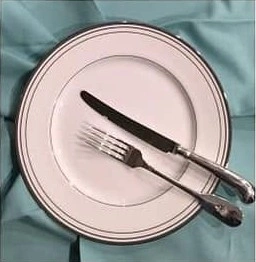
Once you’ve finished your meal, place both utensils neatly together.
The most widely accepted position is:
- Fork and knife parallel.
- Handles resting near the 4–5 o’clock position.
- Knife blade facing inward.
- Fork tines facing upward (American style) or downward (Continental style).
This quietly tells the server: “I’m finished.” How to put silverware after eating is one the most important and visible parts of dinner etiquette.
🍰 How to Use Dessert Utensils?
Many people look around the table when dessert arrives.
That’s perfectly normal.
In a formal place setting, dessert utensils usually appear in one of two ways.
Option 1
They’re already on the table.
You’ll find them above the dinner plate.
Usually:
- Dessert spoon points to the left.
- Dessert fork points to the right.
Option 2
The server brings them with dessert.
This is very common in restaurants because it keeps the table less crowded.
🚫 Four Silverware Mistakes Worth Avoiding
👉 Pointing with Your Fork or Knife
It is natural to gesture while talking, but avoid using your fork or knife to point at people or emphasize what you’re saying. Besides looking impolite, it can distract other diners and even be unsafe. If you’re joining the conversation, place your utensils on the plate before using your hands to gesture.
🔪 Using Your Knife to Carry Food to Your Mouth
In most dining settings, the knife is used for cutting or helping guide food onto the fork—not for eating directly. Once the food is cut, lift it with your fork instead. While a few European traditions make exceptions for certain soft foods, using the knife as a utensil is generally considered poor etiquette.
😋 Overloading Your Fork or Spoon
Trying to fit too much food onto a fork or spoon often leads to spills and makes eating awkward. Take smaller, comfortable bites instead. You’ll enjoy the meal more, and your table manners will look much more polished.
😬 Licking Your Knife or Utensils
Even if the food is delicious, avoid licking your knife, fork, or spoon clean. If there’s sauce left on the plate, use your fork with a small piece of bread only if the setting and occasion make it appropriate. Otherwise, simply leave the remaining food on the plate.
💡 Practical Tips for Real-Life Dining
🍽️ How Do You Use Cutlery in a Formal Dinner
If you hae aniety about how to use silverware at a formal dinner, the good news is that the same basic principle applies to every formal dinner. Once you learn which utensil belongs to which course, even a large cutlery set becomes easy to use.
A formal dinner follows a simple rhythm.
You don’t need to memorize dozens of rules.
Just remember these habits.
✔ Sit upright without leaning over the plate.
✔ Wait until everyone has been served before eating (unless your host says otherwise).
✔ Use the outside utensil first.
✔ Cut only one or two bites at a time.
✔ Keep elbows off the table while eating.
✔ Place your utensils on the plate—not on the tablecloth.
✔ Use your napkin before reaching for your drink.
✔ Eat at the same relaxed pace as everyone else.
Most formal dinners aren’t about perfection. They’re about making the people around you feel comfortable.
🍽️ How to Use Silverware at a Fancy Restaurant
How to use fine dining utensils at a restaurant may seem intimidating, but the same basic rules apply.
✔ Start from the outside.
✔ Follow the order of the courses.
✔ If you’re unsure, watch your host.
✔ Eat at a relaxed pace.
✔ Place used utensils on your plate—not on the tablecloth. Remember, experienced diners rarely rush. Good manners look calm, not haste. Truly, it doesn’t take any special effort to learn how to use cutlery at restaurant.
🤔 What If You Pick the Wrong Fork?
Here’s a little secret. Almost everyone has done it.
If you accidentally use the wrong fork, don’t panic.
Simply continue eating.
Drawing attention to the mistake usually creates more awkwardness than the mistake itself.
Good manners aren’t about never making mistakes.
They’re about staying relaxed and making others feel comfortable.
🏠 Can You Practice These Skills at Home?
Absolutely.
In fact, it’s the easiest way to build confidence.
Set the table for a weekend dinner using:
- Salad fork
- Dinner fork
- Dinner knife
- Soup spoon
- Dessert spoon
Then practice:
- Using the outside utensil first.
- Holding the knife correctly.
- Resting your silverware.
- Finishing your meal with the proper utensil position.
After a few meals, these habits become automatic.
Practicing these skills is much easier when you have a complete place setting instead of mismatched utensils. You may like to check out some collections of complete Lenox silverware sets for 12 which may make formal table settings much easier.
🏁 Final Thoughts
There are not dozens of rules for the proper use of silverware. It’s knowing a few simple habits that work pretty much anywhere. Begin on the outside , and use the next utensil for the next course ; and when you are pausing or finished, lay your fork and knife on the plate .
Don’t care you make a little mistake. Nearly everyone does at some time. Most of the people sitting around the table are paying less attention to which fork you’re holding than to the conversation.
The more you use habits the less you’ll think about them. They will soon feel as natural as holding a spoon at home. Good table manners are not about appearing perfect. They stem from making the people around you feel comfortable.
📚 Continue Learning
If you’d like to improve your dining etiquette even further, you may also enjoy these guides on Flatware Finesse:
- How to Set Flatware on a Table — A Complete Guide to Proper Silverware Placement
- How to Clean Silverware Without Damaging the Finish
- Is Silver-Plated Flatware Worth Buying?
These articles complement this guide and answer many of the questions people have before buying or using quality flatware.
❓ Frequently Asked Questions
🥣 Where should you put your soup spoon after finishing soup?
Place the soup spoon on the soup plate or the underplate beneath the bowl if one is provided. Avoid leaving it inside the soup bowl or directly on the tablecloth. In many restaurants, the server will remove the bowl and spoon together after the soup course.
🍞 Is it okay to butter the whole bread roll at once?
No. Formal dining etiquette recommends tearing off one bite-sized piece of bread at a time and buttering only that piece before eating it. This keeps the bread fresh and is considered more refined than buttering the entire roll.
☕ Where should the teaspoon go after stirring tea or coffee?
After stirring, place the teaspoon on the saucer beside the cup. Don’t leave it standing in the cup while drinking, as it may spill and looks untidy.
🥩 Is it rude to cut all your food before you start eating?
Yes, at a formal dinner it is generally considered poor etiquette. Cut only one or two bites at a time so the food stays warm and your meal doesn’t look rushed.
🍗 Can you pick up food with your fingers at a formal dinner?
Some foods are meant to be eaten with your fingers, such as bread, asparagus (at some informal meals), or certain shellfish served without utensils. However, foods served with forks or knives should generally be eaten using the provided utensils.
🍽️ What should you do if a utensil falls on the floor?
Don’t crawl under the table to retrieve it. Leave it where it is and quietly ask the server for a clean replacement. Most restaurants expect this to happen from time to time.
🤝 Which side does the bread plate belong to?
Your bread plate is almost always on the left side of your dinner plate, while your drinking glasses are on the right. A simple way to remember this is “bread on the left, drinks on the right.”
🧼 Should you wipe your silverware before using it?
If a utensil appears dirty, quietly ask the server for another one instead of wiping it with your napkin. In a quality restaurant, replacing it is normal and won’t be considered rude.
😅 What if you forget a rule during the meal?
Don’t worry. Most dining mistakes are minor and go unnoticed. Stay relaxed, follow the pace of the meal, and watch the host or other experienced diners if you’re unsure. Good manners are more about courtesy than perfection.
Discover more from Flatware Finesse
Subscribe to get the latest posts sent to your email.