It’s the perennial question — that shiny “silver” flatware set you inherited from your grandmother or picked up at a flea market: Is it truly silver, or is it fake? How to tell if flatware is real silver has long been more than a matter of question; it’s also about value, care, and history.
There’s more to real silver than its shine — it has a soul. It acquires beauty with age, weathers to a handsome patina, and bears the quiet weight of craftsmanship. However, since the allure of silver-plated and stainless steel utensils is the same, even experienced collectors can recoil from sitting in judgment after just one look.
Before you reach for a testing gear, let’s first set the record straight: whether you’re holding real silver flatware doesn’t always mean it’s 100% silver. Real sterling silver flatware is 92.5 percent silver (marked “925”) and has been alloyed with a small amount of copper to increase its strength. Pure silver (99.9%) is too soft for everyday use in jewelry or tableware, so it’s often alloyed with other metals. On the other hand, silver-plated flatware is made by covering a non-precious base metal with a very thin layer of silver and so it shouldn’t pass off as real silver.
So, how do you tell the real from the glitter? Let’s take a look — method by method — at the surest ways to spot the genuine item.
🧠 Understanding Silver Types: Sterling vs. Pure vs. Plated
People often ask how to tell if sterling silver flatware is real, when plated silver is touted as authentic “silver”. They believe, after all, the silver coating in plated silver is real, indeed. One familiar example is 1847 Rogers Bros silverware, much of which is silverplate rather than solid sterling silver. The fact is that sterling silver is solid throughout—no base layer underneath—whereas silver-plated items have only a microns-thin coating that can rub away with polishing or use. If the surface of your spoon or knife reveals yellowish or coppery metal at worn spots, it’s silver-plated. Sterling, on the other hand, maintains consistent color through and through.
Here’s a quick breakdown of different silverware types that resemble silver, at least, visually:
- Sterling Silver (92.5%) — The standard for real silverware. Durable, valuable, and ages beautifully.
- Fine Silver (99.9%) — Almost pure, but too soft for utensils; used mainly for coins or ornaments.
- Silver-Plated Flatware — A thin layer of silver fused to a cheaper metal base. It may look similar at first but wears down with polishing.
- Stainless Steel Flatware — Not silver at all, though modern finishes can mimic its shine. Highly durable and resistant to tarnish. Learn more about the practical implicaitons of difference between stainless steel and sterling silver flatware.
The beauty of sterling lies in balance — enough silver for that soft gleam, enough alloy for everyday use.
🔍 1. The Hallmark Test — The Silver Truth Is in the Stamps
If you only perform just one test on how to tell if something is real silver flatware, make it this one. Real silver always speaks through its markings.
Look for tiny stamps or hallmarks on the back of a spoon handle or the underside of a knife. The most trustworthy indicators include:
“925” — meaning 92.5% silver (sterling)
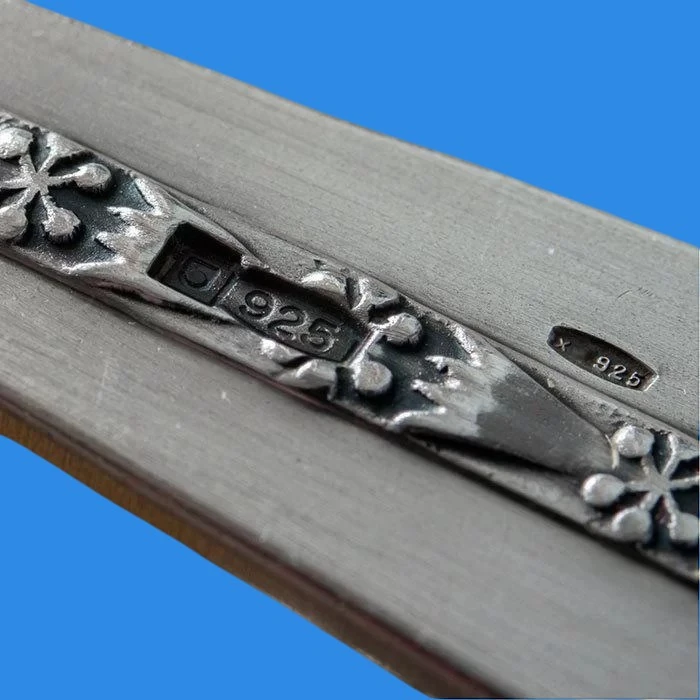
“Sterling” or “Ster” — the hallmark for authentic sterling silver, mostly used in U.S. and British pieces
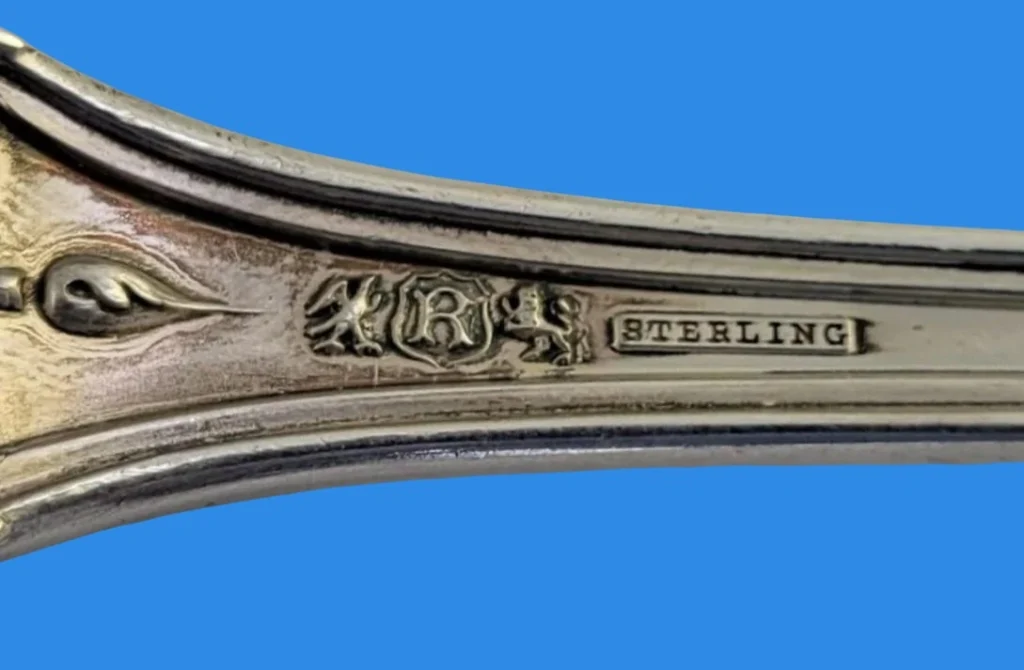
“800,” “900,” “958” — older European purity marks
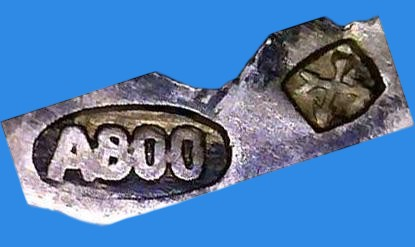
Maker’s marks or assay symbols— such as lions, crowns, or initials identifying the silversmith or origin
Here is a chart of symbols stamped on silver flatware by makers of different countries that would allow you to find how to tell if sterling silver flatware is real:
| Country | Typical Symbol | Meaning |
|---|---|---|
| United States | “Sterling” or “925” | No national assay office; purity shown by text/number |
| United Kingdom | Lion passant | Confirms sterling silver (.925 purity) |
| France | Minerva head | National guarantee of silver standard |
| Germany | Crown and moon | Introduced in 1888, indicates silver content |
| Netherlands | Sword or lion | Marks purity, with date letters |
| Sweden | Three crowns | National symbol plus town/date marks |
| Russia | Kokoshnik head | Woman’s head in profile, with fineness number |
| Austria-Hungary | Diana head | Used 1872–1922, with silver fineness |
If you find “EPNS,” “IS,” or “Silver Plate” anywhere, the piece is not solid silver. Those abbreviations mean Electroplated Nickel Silver — a silver coating over base metal. Inspect under bright light or with a magnifying glass. Real hallmarks are cleanly stamped into the metal, not printed or etched.
🧲 2. The Magnet Test — Fast and Foolproof
Silver isn’t magnetic — and this test is as easy as it sounds.
Take a small magnet or fix a magnetic bar on the wall, and bring the flatware in contact with the magnet. If it sticks firmly, your flatware is not real silver. It’s likely stainless steel or silver-plated on a magnetic metal base.
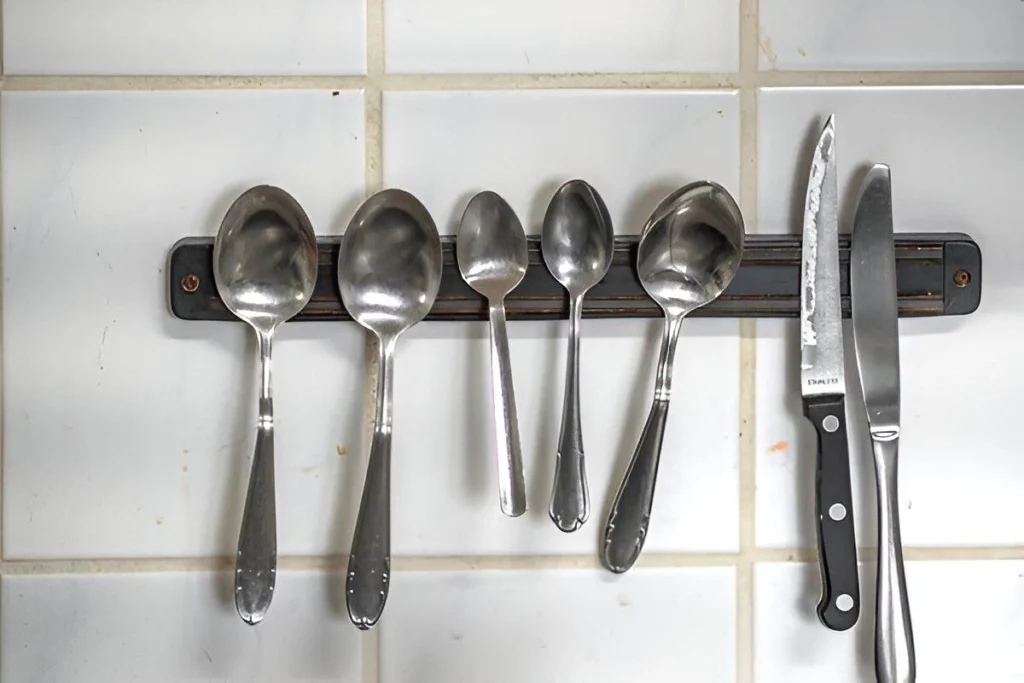
A light pull or no reaction at all means you might be holding solid silver — or at least a non-magnetic base like copper or brass. This is one of the simplest way of finding how to tell if flatware is real silver. Combine this test with hallmark verification to be sure.
👃 3. The Smell Test — The Nose Knows
Here’s one most people overlook. Real silver has no smell.
If your flatware carries a strong metallic or coppery scent, it’s likely a plated or alloy piece with high base metal content.
The smell comes from oxidation of the underlying material, not from silver itself — which is nearly odorless. A quick sniff can help rule out imposters before you even reach for more advanced tests.
🧼 4. The Tarnish Test — Beauty in the Patina
Unlike stainless steel, silver tells stories through its tarnish.
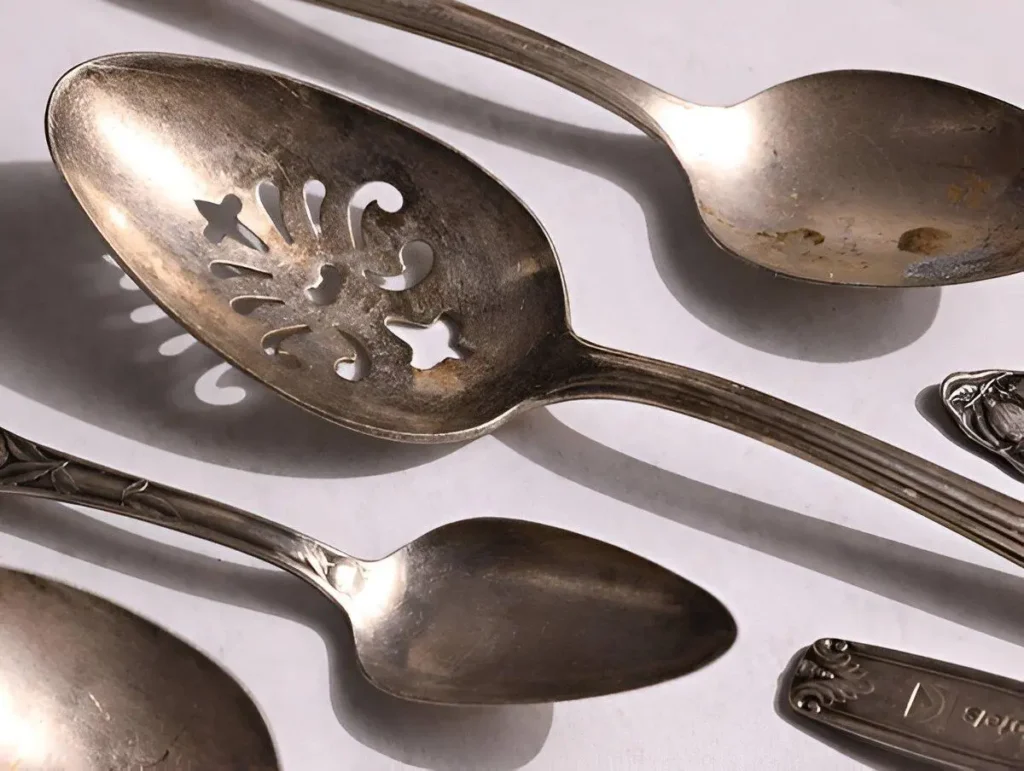
Over time, genuine silver reacts with sulfur in the air, creating a soft, dark layer of silver sulfide — a gray-to-black patina that’s actually part of its charm. If your “silver” flatware never tarnishes, it’s likely stainless steel. If it turns patchy green or reddish, it’s probably silver-plated with copper or brass underneath. This observation gives you a very good idea on how to tell if flatware is real silver. When you polish true silver, the tarnish, however, wipes off easily, revealing a deep, glowing shine — the kind that makes antique collectors swoon.
🧊 5. The Ice Cube Test — The Cool Science Trick
Silver is an excellent heat conductor — in fact, one of the best among metals.
Place an ice cube on your suspect spoon or fork and compare it with another on stainless steel. If the ice on the silver piece melts noticeably faster, congratulations — you’re likely dealing with genuine silver.
It’s a surprisingly effective test that relies on physics, not guesswork.
🎶 6. The Sound Test — Listen for the Ring of Authenticity
Tap the edge of your flatware gently with another metal piece. Real silver has a distinct, soft, bell-like ring that lingers for a moment.
Silver-plated or stainless pieces, in contrast, produce a dull, clunky tone.
It takes practice to hear the difference, but once you do, it becomes unmistakable — like the difference between crystal and glass. Of course, you need to be a careful listener to find answer to your question: how to tell if my flatware is real silver?
⚗️ 7. The Acid or Professional Test — For Absolute Certainty
When all else fails, chemistry settles the debate. Here the conclusive test to find how to tell if something is sterling silver:
Professional jewelers and antique appraisers use nitric acid tests or electronic silver analyzers to confirm authenticity. If you’re confident, you can also give it a try with DIY Testing Acid with Black Scratch Stone.
These tests reveal the true metal composition — no guessing involved. If your flatware might be valuable or antique, don’t attempt acid testing at home. A small drop can permanently mark the surface. Leave this one to professionals who use micro-abrasion methods to protect the finish.
💡 Pro Tip: Start Simple, Then Go Deep
Begin with the hallmark and magnet tests. They’re non-destructive, instant, and reliable for 90% of cases.
Only move to advanced checks like sound, tarnish, or professional testing if you’re unsure or suspect antique value.
Many families discover their “ordinary” cutlery sets are actually valuable heirlooms once examined closely — and properly cared for. If your pieces are older or inherited, our guide to vintage flatware can help you put their style and age into context.
📊 Comparison Chart — How to Tell If Flatware Is Real Silver
Sterling Silver Testing Methods
| Method | What to Look For | What It Means |
|---|---|---|
| Hallmark / Purity Stamp | “925,” “Sterling,” or maker’s mark | Confirms sterling silver (92.5% purity) |
| Magnet Test | Magnet does not stick | Likely silver or non-magnetic alloy |
| Smell Test | No metallic scent | Real silver; fake smells coppery |
| Tarnish Behavior | Gray-black patina, polishes clean | True silver oxidizes naturally |
| Ice Cube Test | Ice melts quickly on metal | Silver’s high heat conductivity |
| Sound Test | Bell-like tone when tapped | Silver resonates softly, not dull |
| Professional Test | Nitric acid or electronic check | Definitive authentication |
🔍 Frequently Asked Questions: Sterling Silver Testing
Q: How to tell if my flatware is real silver?
A: To verify real silver, start by looking for hallmarks like “925” or “Sterling” stamped on the pieces. You can also perform simple home tests: use a magnet (real silver won’t stick), check for a lack of metallic smell, observe tarnish that cleans off evenly, or test how quickly an ice cube melts on the surface. For definitive confirmation, consider a professional acid or electronic test.
Q: What’s the quickest way to test silver at home?
A: The magnet test is the fastest method. If a magnet sticks strongly, the item is not sterling silver. However, note that some non-silver metals are also non-magnetic, so combine this with other tests like checking for hallmarks or tarnish behavior for better accuracy.
Q: How do I tell sterling silver from silver-plated flatware?
A: Sterling silver is solid throughout, so it feels heavier, shows consistent gray-black tarnish, and displays clear “925” or “Sterling” marks. Silver-plated items, on the other hand, may show wear that reveals a different metal underneath, feel lighter, and often lack authentic hallmarks. Plated pieces also produce a duller sound when tapped.
Q: Will a magnet stick to real silver silverware?
A: No, genuine silver is non-magnetic. If a magnet is strongly attracted, the item contains ferrous metals and is not sterling silver. Keep in mind, though, that some silver-plated items with copper or brass bases may also be non-magnetic, so use this test as an initial screening rather than final proof.
Q: Why do some silver items have numbers like 800 or 999?
A: These numbers indicate silver purity. “925” or “Sterling” means 92.5% silver, the standard for sterling. “999” refers to fine, almost pure silver, while “800” or “835” are common in European countries and denote lower silver content.
Q: Does real silver hold value over time?
A: Yes, sterling silver retains intrinsic value due to its silver content. Well-maintained or antique pieces may even appreciate, while damaged items still hold melt value. Silver-plated flatware, however, has minimal precious metal value.
Q: What’s the proper way to clean and maintain sterling silver?
A: Handwash with mild soap and warm water, then dry immediately. For tarnish, use a soft cloth with silver polish or a paste of baking soda and water. Store pieces in tarnish-resistant bags or cloth to slow oxidation, and avoid exposing them to harsh chemicals or abrasive materials.
Q: How long can I expect sterling silver flatware to last?
A: With proper care, sterling silver can last for generations. Its durability comes from the copper alloy mixed with silver, making it resistant to wear and corrosion. Many families pass down sterling silver sets that remain functional and beautiful over decades.
Q: What should I avoid to prevent damaging my silver?
A: Keep silver away from chlorine, sulfur, and abrasive cleaners. Don’t leave it exposed to salt or humidity, and avoid the dishwasher, as detergents and high heat can harm the finish. Regular gentle cleaning and dry storage will help preserve its appearance.
Q: Can damaged silverware be repaired?
A: Yes, dents, scratches, and even broken parts can often be repaired by a skilled silversmith. The feasibility depends on the extent of the damage and the value of the piece, so consult a professional for an assessment before deciding on repairs.
Discover more from Flatware Finesse
Subscribe to get the latest posts sent to your email.